title: "U.S. Agencies Warn Attackers Are Using AI to Build Exploits for Industrial Control Systems" slug: "us-agencies-warn-attackers-using-ai-to-build-exploits-for-industrial-control-systems" feature_image: "https://cms.llms.blog/content/images/2026/08/cisa-ai-ics-exploits.png" status: "published" tags: ["AI Security", "Industrial Control Systems", "CISA", "Cybersecurity", "LLM"]
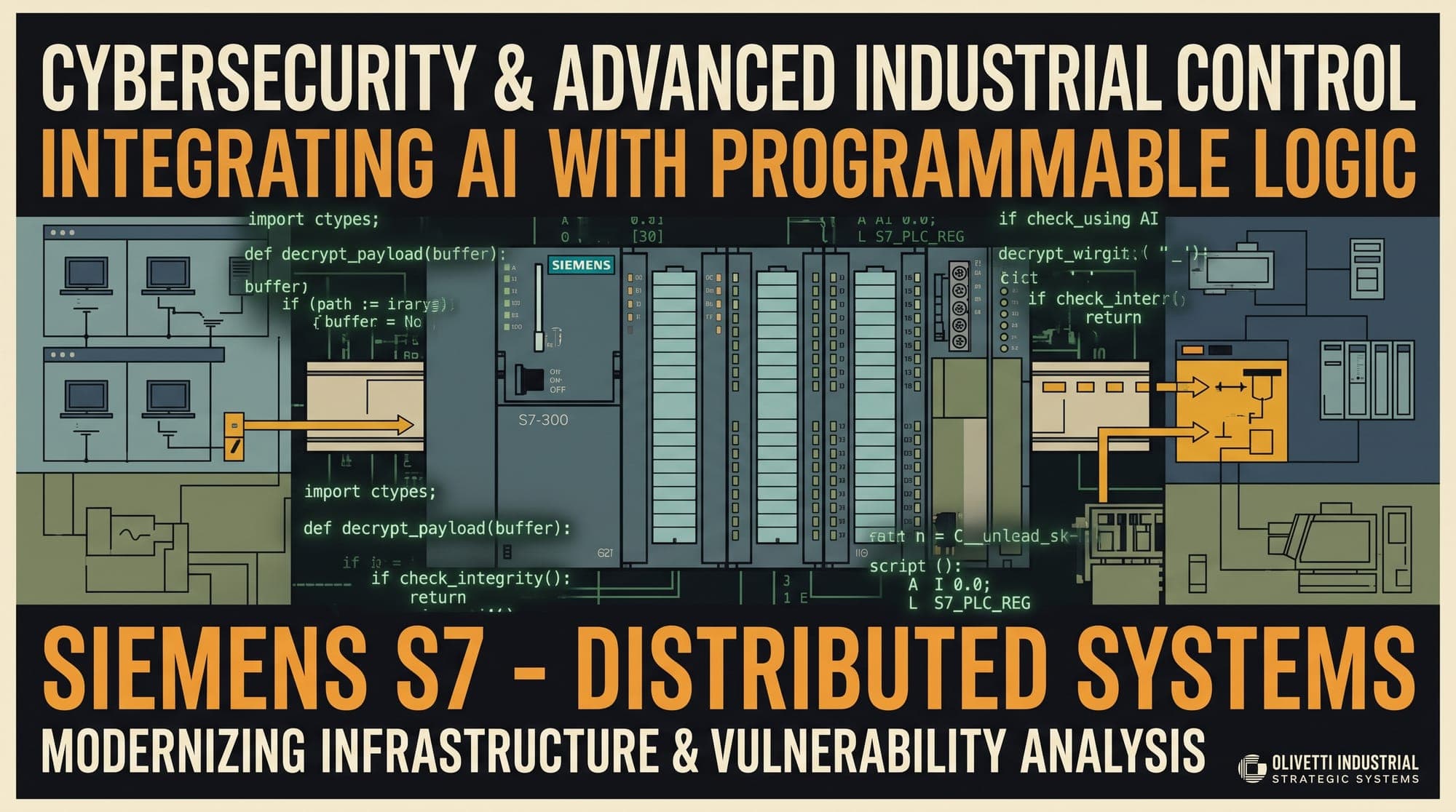
A joint cybersecurity advisory from the NSA, CISA, FBI, Department of Energy, and EPA warns that threat actors are using AI to generate exploitation scripts targeting Siemens S7 Series programmable logic controllers (PLCs), dramatically reducing the technical expertise and time required to attack industrial control systems.
The advisory (CISA AA26-231A), released August 18, classifies this as an active threat to U.S. critical infrastructure sectors including energy, water, chemical, manufacturing, food and agriculture, and commercial facilities. Threat actors are leveraging AI assistance to create custom tools that mimic legitimate OT monitoring solutions using open-source industrial automation libraries such as snap7.dll and python-snap7, combined with AI-assisted scripting to access PLC memory, configuration data, and ladder logic programs via the S7comm protocol.
According to the agencies, "Using AI to generate exploitation scripts represents an evolution in threat actor capabilities, dramatically reducing the technical expertise and time required to develop working ICS exploitation scripts and malicious tools. In addition, AI enables adversaries to rapidly leverage additional attack vectors and adapt to defensive measures."
The actors conduct reconnaissance using Internet scanning services to find Internet-exposed PLCs running outdated software. They test and refine exploitation techniques against specific PLC models to improve their ability to compromise them, using read access to understand target environments in preparation for future write operations that could cause disruption.

Notably, the UK's AI Safety Institute found in simulations that models have so far failed to hack operational technology systems on their own — they didn't fail at the devices themselves, but got stuck on the IT systems in front of them.
The advisory provides a detailed mitigation framework mapped to MITRE ATT&CK for ICS and MITRE D3FEND, urging organizations to inventory all Siemens S7 Series PLCs, apply critical security patches, verify network segmentation to ensure PLCs are not accessible from the Internet, review and strengthen access controls, and deploy ICS-aware intrusion detection monitoring for unauthorized PUT/GET operations and snap7.dll library imports.
Sources
- CISA, "Defending Against an Active Threat to Siemens S7 Series PLCs," Cybersecurity Advisory AA26-231A, August 18, 2026. https://www.cisa.gov/news-events/cybersecurity-advisories/aa26-231a
- The Decoder, "Attackers are using AI to build exploits for industrial control systems, U.S. agencies warn," August 19, 2026. https://the-decoder.com/attackers-are-using-ai-to-build-exploits-for-industrial-control-systems-u-s-agencies-warn/