OpenAI VP of Americas Sales Kaylin Voss Resigns Following CRO Denise Dresser Exit

OpenAI Vice President of Americas Sales Kaylin Voss has resigned from the company, according to reporting by The Information. The departure comes one week after the exit of Chief Revenue Officer Denise Dresser, signaling continued turnover across the company's enterprise go-to-market leadership. Voss had overseen commercial sales operations in the Americas after joining OpenAI following previous sales leadership roles at Salesforce and Slack. Leadership Changes Across Enterprise GTM The depa

1 min
OpenAI VP of Americas Sales Kaylin Voss Resigns Following CRO Denise Dresser Exit

OpenAI Vice President of Americas Sales Kaylin Voss has resigned from the company, according to reporting by The Information. The departure comes one week after the exit of Chief Revenue Officer Denise Dresser, signaling continued turnover across the company's enterprise go-to-market leadership.

Voss had overseen commercial sales operations in the Americas after joining OpenAI following previous sales leadership roles at Salesforce and Slack.

Leadership Changes Across Enterprise GTM

The departure follows a broader reorganization of OpenAI's enterprise commercial operations:

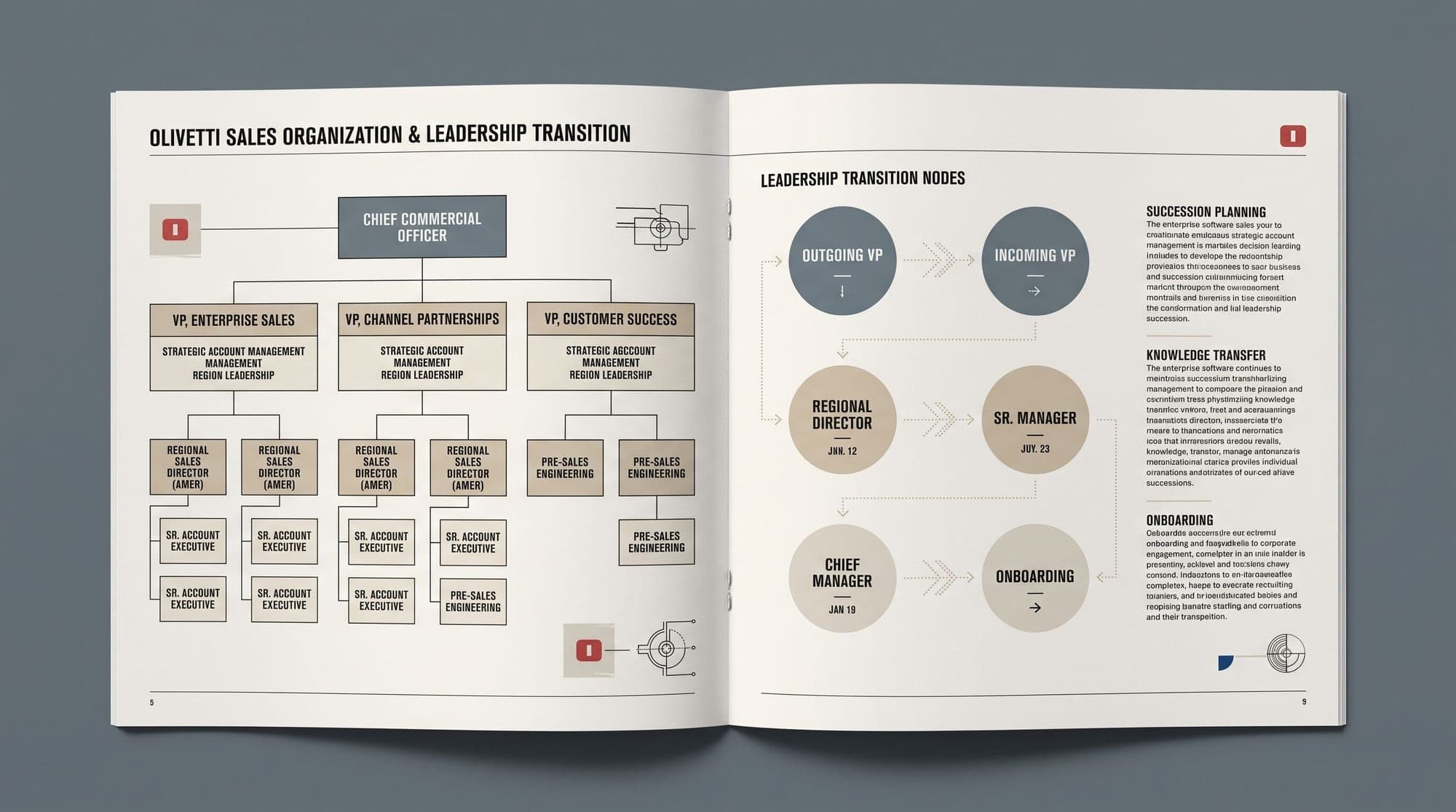
OpenAI enterprise sales organization and go-to-market pipeline
  • Chief Revenue Officer Transition: Denise Dresser, who joined OpenAI in December 2025 after serving as CEO of Slack and spent more than a decade at Salesforce, departed the company last week. OpenAI named Dali Rajic, former president and chief operating officer of cybersecurity firm Wiz, as its new revenue chief.
  • Operational Consolidation: OpenAI co-founder and President Greg Brockman has consolidated direct operational responsibility around enterprise sales strategy and commercial execution.
  • Team Restructuring: Sources familiar with internal operations indicate that the rapid succession of leadership exits has prompted discussions regarding additional staffing adjustments across the enterprise sales organization.

Enterprise Competition and Commercial Strategy

The executive transitions arrive as OpenAI accelerates efforts to expand recurring enterprise software revenue. The company is competing directly against Anthropic, Microsoft, and Google for multi-year enterprise AI agreements covering frontier model APIs, developer tooling, and custom workplace workflows.

The leadership changes also coincide with OpenAI's ongoing structural transition and preparations for an eventual public listing, following confidential S-1 draft filings submitted to the Securities and Exchange Commission earlier this summer.


Sources

Written by

More to read

  • Stealth Model 'Ox Alpha' Surfaces with 1M Multimodal Context and 100 Trillion Daily Token Allocation

    An anonymous frontier model named "Ox Alpha" has launched across OpenRouter and the OpenCode developer environment, offering free access backed by a reported 100 trillion tokens per day in serving capacity. The model features a 1,048,576-token context window with native multimodal support spanning text, image, and video inputs. The unannounced release follows a pattern of stealth evaluations across AI model aggregators, where frontier labs deploy pre-release checkpoints to collect blind compara

    1 min
  • OpenAI Cuts GPT-5.6 Sol API and Coding Tool Pricing by Over 20%

    OpenAI has lowered developer pricing for its flagship GPT-5.6 Sol model across its API and developer toolchain for a three-month promotional window. The rate adjustment reduces input token costs by 20% and output token costs by 33.3%, bringing standard short-context inference to $4.00 per million input tokens and $20.00 per million output tokens. The revision comes amid intensified developer pricing pressure across the frontier model ecosystem, particularly following aggressive pricing from com

    1 min
  • Hierarchical Tree Retrieval in Production RAG: Architecture, Recursive Clustering, and Serving Economics for RAPTOR

    Production Retrieval-Augmented Generation (RAG) pipelines routinely hit a fundamental structural ceiling: flat chunk retrieval. Standard retrieval architectures segment ingested documents into uniform, contiguous chunks (typically 100 to 512 tokens), embed them in a vector space, and fetch top-k nearest neighbors based on cosine similarity. This design functions well for granular, needle-in-a-haystack fact lookups ("What was the Q3 gross margin for EMEA?"). However, it fails on thematic, holist

    1 min

