Autoregressive language models generate text by sampling from a probability distribution over a discrete vocabulary at each step. While unconstrained sampling succeeds across open-ended text tasks, it offers no syntactic guarantees when producing machine-readable formats such as JSON, SQL, or structured tool calls. In automated agent loops, a single missing quotation mark, unbalanced bracket, or unescaped control character breaks downstream parser execution, forcing expensive retry round-trips.
Prompt engineering, few-shot demonstration formatting, and zero-temperature decoding reduce error rates but cannot eliminate syntactic failures across long-tail token distributions. To guarantee structural validity, modern inference engines integrate grammar-constrained decoding directly into the sampling pipeline, masking logits before softmax so the model can only select syntactically legal tokens.
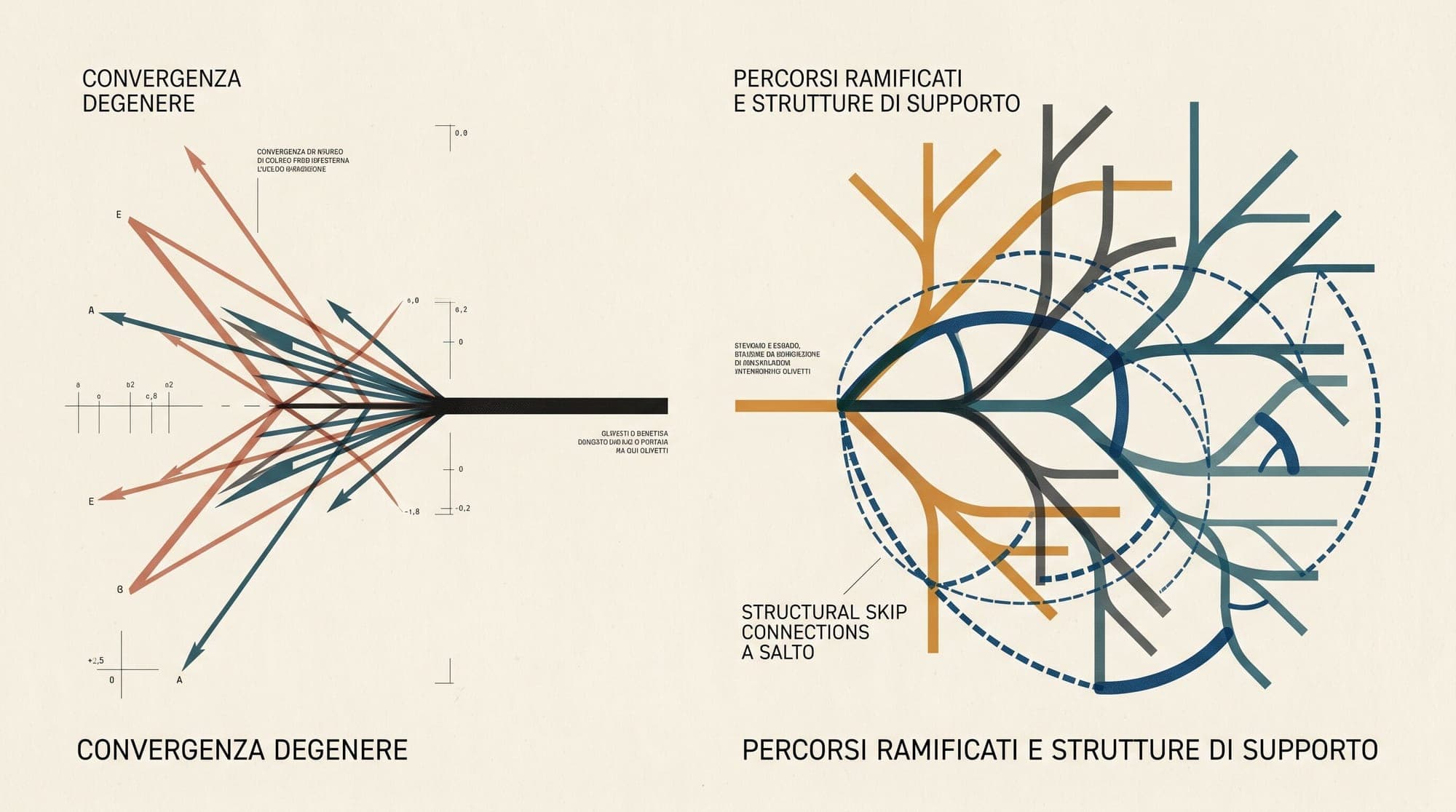
Structured generation has evolved through three distinct architectural phases, moving from heavy finite-state compilation to pushdown parsers and modern asynchronous bitmask engines.

Generation 1: Finite State Automata and Precomputed Vocabulary Indexing
The earliest practical high-throughput approaches compiled regular expressions and simplified schemas into Deterministic Finite Automata (DFAs), a design popularized by libraries such as Outlines (Willard and Louf, 2023).
In a DFA-based guided generation architecture:
- The target schema or regular expression is parsed into an abstract syntax tree and compiled into a state transition graph.
- An offline indexing step maps every state in the DFA to the complete set of vocabulary tokens that represent valid character transitions from that state.
- At runtime, sampling executes as an memory lookup: the engine queries the precomputed token mask corresponding to the active DFA state and masks invalid logits with negative infinity before sampling.
While DFA indexing achieves minimal latency overhead during token generation, the architecture faces fundamental operational constraints:
- State Space Explosion: Regular expressions and DFAs cannot parse arbitrary context-free grammars, such as arbitrarily nested JSON objects, recursive arrays, or complex domain-specific languages, without exponential state replication.
- Upfront Compilation Overhead: Constructing the full vocabulary-to-state transition index requires evaluating hundreds of thousands of token-prefix combinations upfront. In multi-tenant environments with dynamic, per-request schemas, compilation latency frequently exceeds the model prefill and decode runtime.
Generation 2: Context-Free Grammar Parsers and Pushdown Automata
To support recursive syntax, nested data structures, and programming language grammars, serving frameworks such as llama.cpp (via GBNF grammars) and research implementations such as SynCode (Ugare et al., 2024) introduced pushdown automata and LR/LALR parsers.
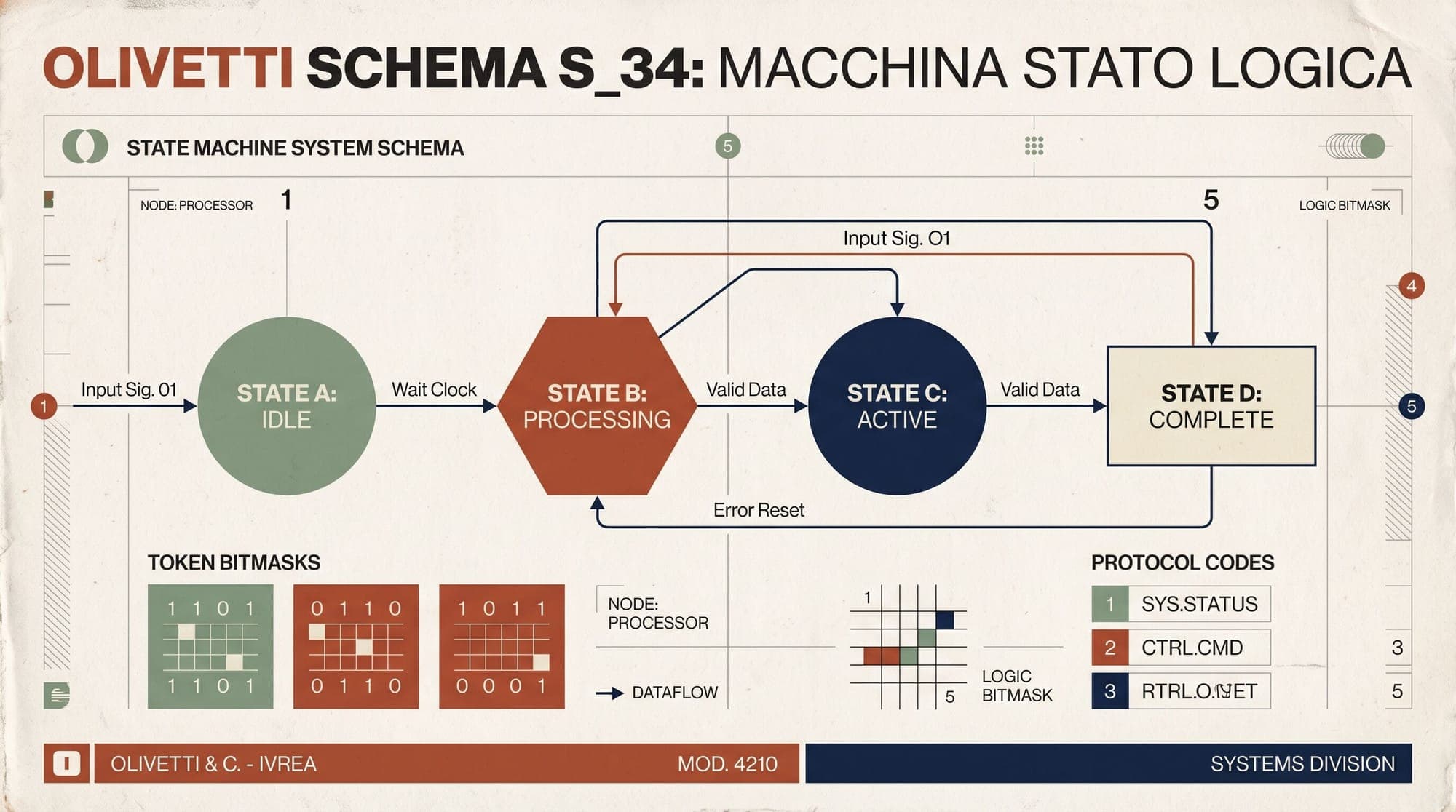
Rather than flattening schemas into static state machines, a context-free grammar (CFG) engine maintains an active parser stack:
- At each generation step, the engine inspects the current stack state.
- It tests candidate vocabulary tokens to determine whether appending each token allows the parser to transition to a valid grammatical state.
- Tokens leading to syntax violations or empty transition sets are pruned from the logit distribution.
While pushdown parsers handle arbitrary nesting, naive implementations introduce severe compute bottlenecks. Evaluating an entire tokenizer vocabulary (typically 32,000 to 128,000+ tokens) sequentially against a grammar parser on the host CPU requires tens of milliseconds per step. In high-concurrency batching loops, this CPU overhead stalls GPU decode kernels, collapsing token throughput.
Generation 3: Vocabulary Partitioning, Persistent Stacks, and Bitmask Compression
High-performance inference engines, including vLLM, SGLang, and TensorRT-LLM, have converged on hybrid grammar execution architectures, led by engines such as XGrammar (MLC.ai, 2024) and llguidance.
Third-generation architectures eliminate the trade-off between grammar expressivity and decoding throughput via four core design principles:
Vocabulary Partitioning
The tokenizer vocabulary is partitioned into context-independent tokens (tokens whose grammatical validity depends strictly on the immediate lexical rule, pre-verified once) and context-dependent tokens (which require dynamic stack interpretation). In practical JSON grammars, over 95% of vocabulary tokens fall into context-independent categories, reducing dynamic parser checks to a small fraction of the vocabulary.
Grammar Inlining and Transformation
Grammars undergo automated normalization to inline terminal character rules. By collapsing multi-character sequences and structural literals into unified transitions, the engine expands the set of context-independent tokens and avoids unnecessary stack pushes and pops during decoding.
Persistent Backtracking Stacks
Instead of allocating fresh parser state or replaying sequence prefixes on every token, the matcher maintains a persistent, zero-copy stack. State transitions execute in time, and the matcher preserves branch pointers to support instant backtracking when handling speculative token proposals.
Compressed Bitset Masking
Token acceptance masks are serialized as packed uint32 or uint64 bit arrays (1 bit per vocabulary entry). For a 128,000-token vocabulary, an entire logit mask occupies only 16 KB of contiguous memory. This compact footprint enables sub-microsecond host-to-device transfers and low-latency CUDA bitwise masking kernels.
Serving Engine Integration and Asynchronous Overlap
To achieve zero-overhead constrained decoding in production, modern inference runtimes co-design the grammar matcher with continuous batching schedulers.
Pipelined CPU-GPU Asynchrony
During autoregressive generation, single-token decode steps are bounded by GPU memory bandwidth rather than tensor compute capacity. Third-generation serving engines exploit this execution profile by overlapping host CPU grammar parsing with device forward passes:
- While the GPU executes the forward pass and logit projection for step , the CPU evaluates grammar transitions for step based on the sampled token from step .
- The CPU generates the packed bitmask and pushes it to device memory via asynchronous DMA transfers before the GPU completes its layer computations.
- A lightweight CUDA kernel applies the bitmask directly to output logits before the sampling kernel executes.
This pipelining conceals grammar evaluation latency behind GPU layer execution, achieving parity with unconstrained decode speeds.
Jump-Forward String Splicing
Structured formats contain deterministic literal sequences, such as JSON field names, punctuation, whitespace, and XML tags. Modern grammar matchers detect the longest unambiguous character string following any state transition.
When a deterministic sequence is identified:
- The engine skips autoregressive decode steps for the literal tokens.
- It splices the predetermined token slice directly into the sequence's Key-Value (KV) cache in a single chunked prefill pass.
- Generation resumes at the next non-deterministic token position (such as a field value), reducing overall token latency and compute spend.
Speculative Decoding with Multi-Candidate Trees
In speculative decoding architectures, a draft model generates multiple candidate token branches or verification trees evaluated by the target model in a single forward pass.
Third-generation grammar matchers expose tree traversal APIs that validate entire draft trees on the host CPU in parallel. The engine constructs composite bitmasks for every tree node simultaneously. If the target model rejects speculative branches, the grammar matcher rewinds its persistent stack pointer to the branch divergence point without re-evaluating historical context.
Production System Trade-offs
Integrating grammar-constrained decoding into production AI infrastructure provides measurable reliability and economic benefits:
- Elimination of Syntax Retries: Enforcing schemas at the logit level guarantees 100% structural validity, removing JSON parsing retry loops and eliminating tail-latency spikes in multi-step workflows.
- Compilation Amortization: Multi-tenant inference proxies maintain thread-safe LRU compilation caches for common OpenAPI and tool calling schemas, amortizing grammar compilation costs to near zero across millions of requests.
- Prompt Token Savings: Because schema compliance is enforced mathematically during sampling, system prompts can eliminate extensive formatting rules, few-shot syntax examples, and error-handling instructions, reducing prompt token counts and preserving KV cache memory.
Sources
- XGrammar: Flexible and Efficient Structured Generation Engine for Large Language Models (arXiv:2411.15100)
- Efficient Guided Generation for Large Language Models (arXiv:2307.09702)
- Grammar-Aligned Decoding (arXiv:2405.21047)
- SynCode: Fast and Reliable Context-Free Grammar Generation (arXiv:2403.01632)
- vLLM Structured Outputs Documentation
- SGLang Structured Generation Architecture
- llguidance GitHub Repository