
Confidential Computing3 articles

Confidential Computing

Articles

  • Google DeepMind Pilots Double-Blind AI Evaluations in Hardware-Isolated Cryptographic Enclaves

    Google DeepMind has introduced a framework for conducting double-blind evaluations of proprietary frontier AI models within cryptographically isolated computing environments. The initiative, developed in partnership with the Singapore AI Safety Institute, OpenMined, AVERI, and MLCommons, aims to resolve the tension between protecting benchmark datasets from contamination and safeguarding proprietary model weights. In traditional third-party model evaluations, organizations face an unavoidable c

    1 min
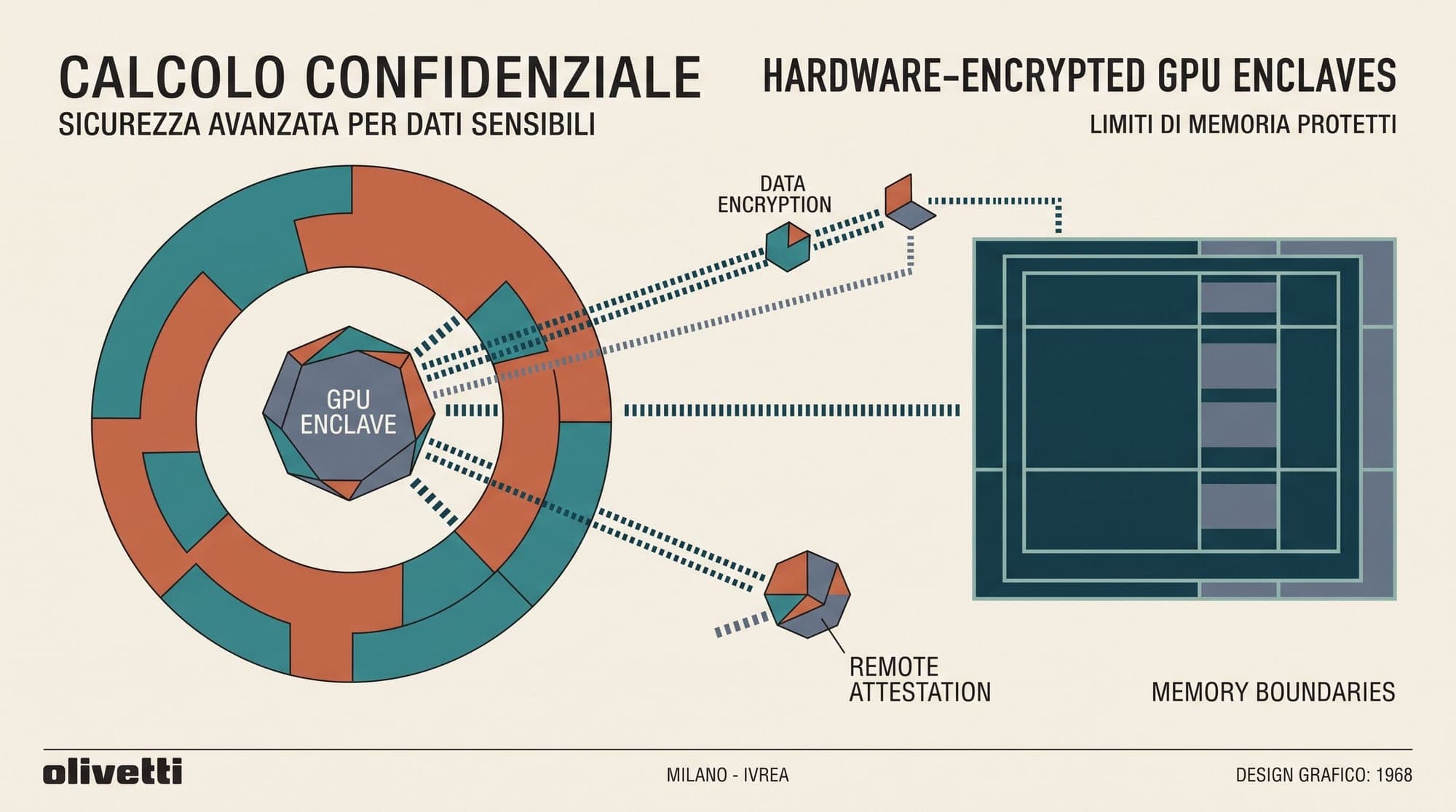
  • Confidential LLM Inference in Production: Hardware TEEs, GPU Enclaves, Remote Attestation, and Serving Performance Trade-Offs

    Deploying foundation models on regulated, proprietary, or multi-tenant workloads introduces severe data exposure risks. Traditional cloud deployments require trusting the cloud provider, the virtualization hypervisor, host operating system kernels, and infrastructure administrators with direct physical and memory access. In standard inference setups, model weights, input prompts, system instructions, and generated tokens reside in cleartext across host RAM, PCIe buses, and GPU High Bandwidth Mem

    1 min
  • Confidential LLM Inference in Production: Hardware TEEs, GPU Enclaves, Attestation, and Serving Performance Trade-Offs

    Confidential LLM Inference in Production: Hardware TEEs, GPU Enclaves, Attestation, and Serving Performance Trade-Offs Deploying large language models in multi-tenant cloud environments introduces a fundamental security boundary problem. Standard transport encryption (TLS) secures prompts in transit, and encryption-at-rest protects checkpoints on disk, but model weights, prompt tokens, and key-value (KV) caches exist in plaintext within system memory during active inference. For organizations p

    1 min