xAI Imagine Image 2.0 Lands Just Behind OpenAI GPT-Image-2 in Arena Benchmarks

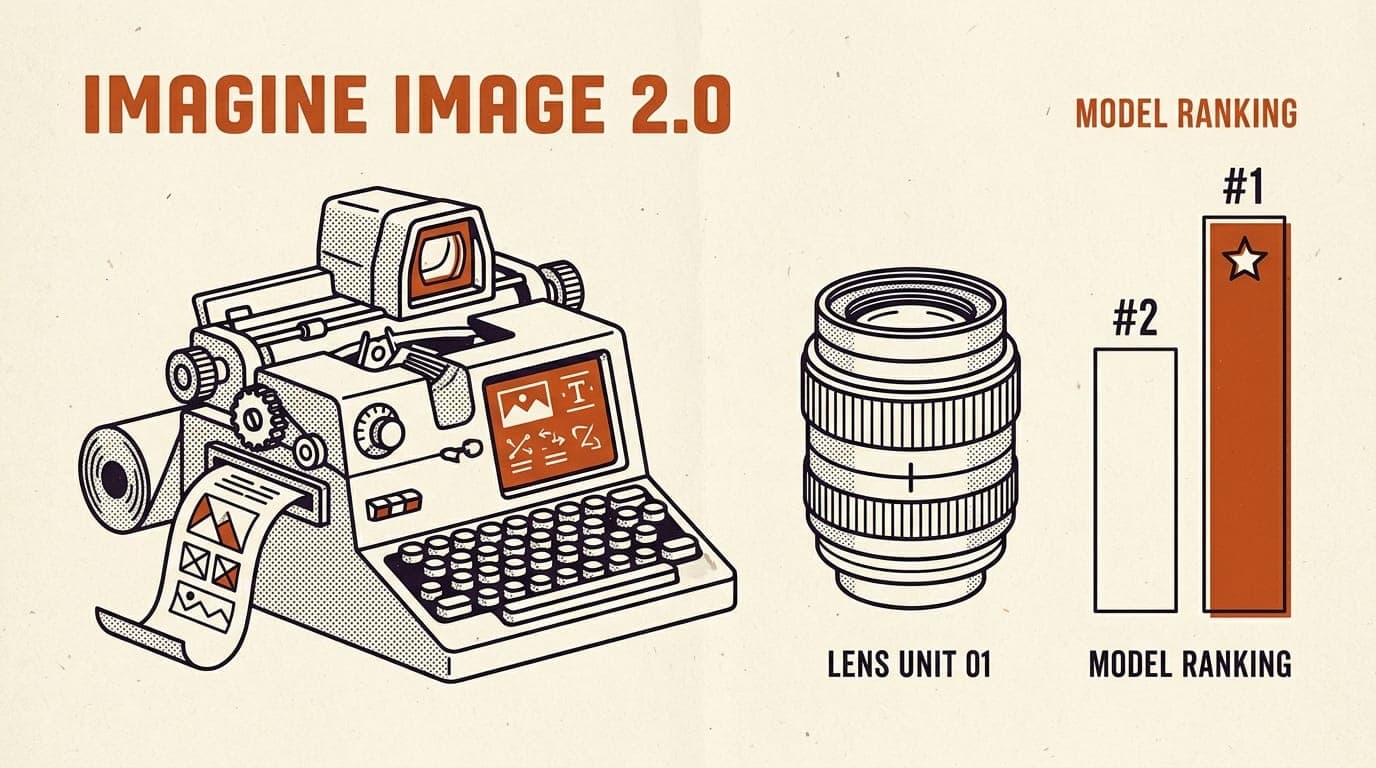
xAI released Grok Imagine Image 2.0 on August 7 as the new Quality Mode on grok.com/imagine and in the Grok iOS and Android apps. The model now sits second in the world on both major image leaderboards, behind only OpenAI's GPT-Image-2. On the Arena leaderboards as of August 7, the faster “low” variant of the model scores an Elo of 1,320 in the Text-to-Image Arena, trailing GPT-Image-2 at 1,380. In the Image Edit Arena it hits 1,439, again behind GPT-Image-2 at 1,463. The model is listed under

1 min
xAI Imagine Image 2.0 Lands Just Behind OpenAI GPT-Image-2 in Arena Benchmarks

xAI released Grok Imagine Image 2.0 on August 7 as the new Quality Mode on grok.com/imagine and in the Grok iOS and Android apps. The model now sits second in the world on both major image leaderboards, behind only OpenAI's GPT-Image-2.

On the Arena leaderboards as of August 7, the faster “low” variant of the model scores an Elo of 1,320 in the Text-to-Image Arena, trailing GPT-Image-2 at 1,380. In the Image Edit Arena it hits 1,439, again behind GPT-Image-2 at 1,463. The model is listed under the SpaceXAI name on Arena.
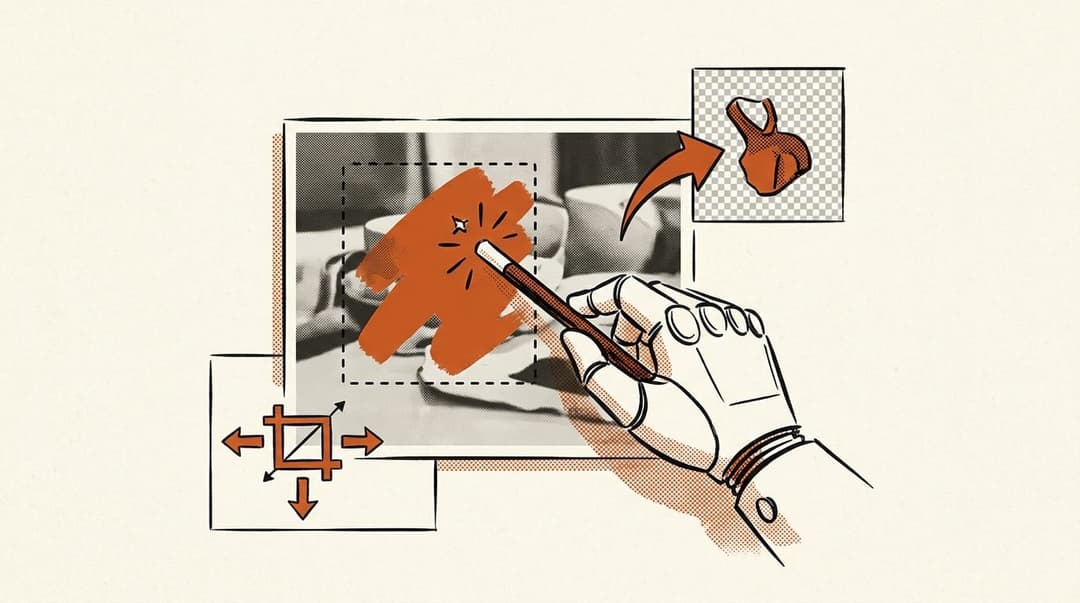
xAI Imagine Image 2.0 editing workflow

The core pitch is editing. Imagine Image 2.0 ships a tool called Magic Wand that modifies only the selected region of an image, plus a segmentation feature for precise areas and a background removal tool that exports subjects on a transparent background. Multi-Ref Editing combines up to five input images into a single generation, and Smart Resize converts an existing image to any aspect ratio while the model fills in the extra space.

xAI trained the model for fidelity across photography, design, and illustration, with editing treated as a first-class capability. The company says it is designed to follow instructions with fine-grained accuracy, keep typography and layout clean in complex visuals, and stay consistent across multiple generations.

The rankings are the company's own figures drawn from the public Arena leaderboards, not an independent evaluation. The announcement also notes that API access for Imagine Image 2.0 is coming soon.

Sources

Written by

More to read

  • Active RAG in Production: Dynamic Triggering, Forward-Looking Queries, and Interleaved Retrieval Architectures

    Standard Retrieval-Augmented Generation (RAG) relies on a static, single-shot execution model: the system takes a user prompt, executes a vector or hybrid search upfront, prepends the retrieved chunks into the prompt context, and executes autoregressive generation. While this pattern suffices for short question-answering workloads, it breaks down systematically in complex, long-horizon generation tasks such as comprehensive technical reports, multi-step agent trajectories, and iterative problem

    1 min
  • Deep Equilibrium Models: How Implicit Layers and Root-Finding Eliminate Activation Memory in Deep Learning

    Deep Equilibrium Models: How Implicit Layers and Root-Finding Eliminate Activation Memory in Deep Learning Deep neural networks derive their expressive capacity from composition. In conventional architectures, depth is explicit: an input vector is transformed sequentially through a chain of $L$ discrete layers, each parameterized by dedicated weights. While effective, this paradigm creates a fundamental computational dependency where training memory scales linearly with network depth ($O(L)$) b

    1 min
  • Texas Governor Greg Abbott Says AI Data Centers 'Dug Their Own Grave' Amid Community Backlash

    Texas Governor Greg Abbott issued a sharp critique of artificial intelligence infrastructure developers on Sunday, stating that data center operators have "dug their own grave" by moving into municipalities without securing local community support or complying with state transparency mandates. Speaking on ABC's This Week, Abbott addressed growing public pushback across Texas over utility grid strain, localized electricity rate increases, and heavy water consumption from cooling facilities. The

    1 min