# OpenAI cuts GPT-5.6 Luna API price by 80 percent three weeks after launch
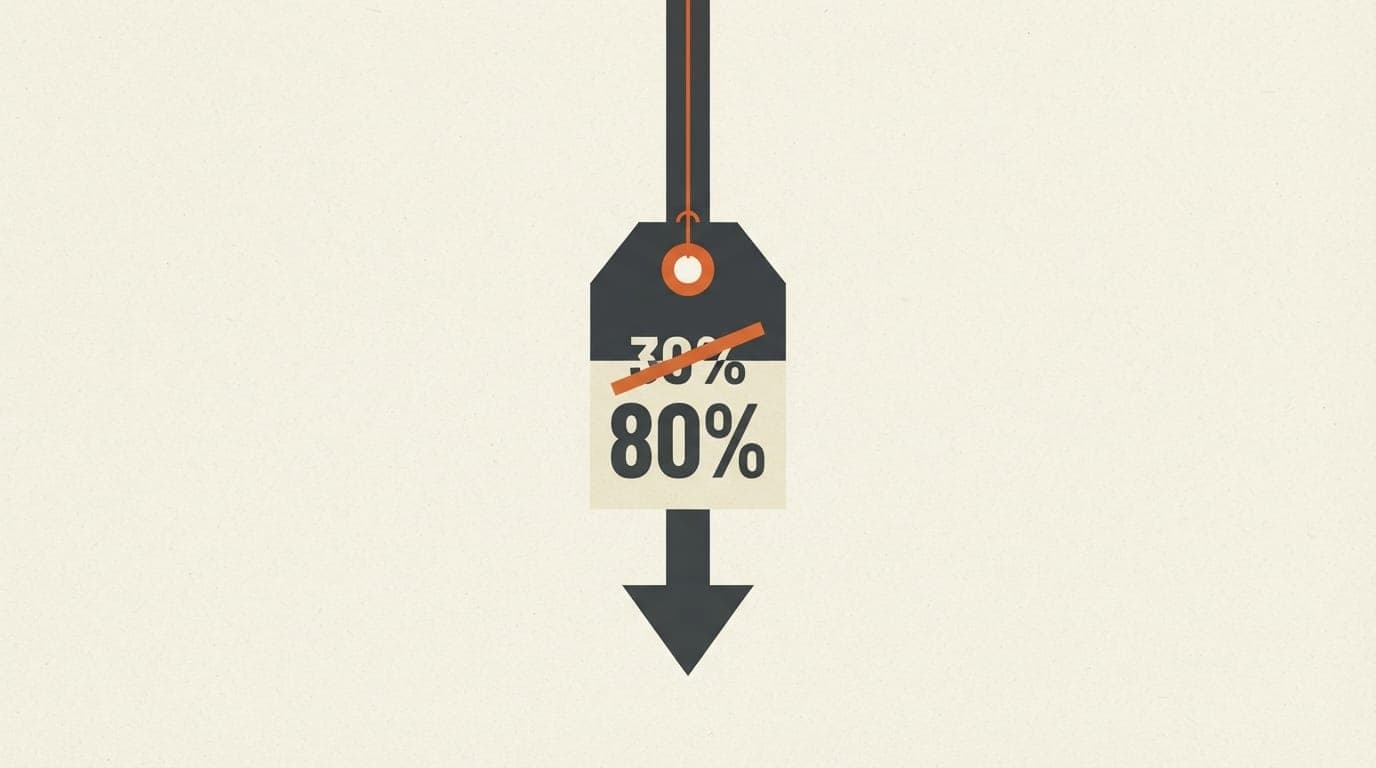
OpenAI dropped API pricing on its two lower-cost GPT-5.6 tiers on July 30, 2026, cutting the cheapest tier by 80 percent and the mid-tier by 20 percent. The flagship Sol tier was left untouched. The change is live on OpenAI's published rate card and logged in its API changelog.
## New rates per million tokens
- GPT-5.6 Luna: $0.20 input / $1.20 output (down from $1 / $6) - GPT-5.6 Terra: $2 input / $12 output (down from $2.50 / $15) - GPT-5.6 Sol: $5 input / $30 output (unchanged)
All three tiers reached general availability on July 9, 2026 at the higher prices. The repricing landed three weeks into the family's commercial life.
## What the cuts cover
The reductions run through every service tier, not just headline rates. Batch and Flex processing, both half the standard price, put Luna at $0.10 input and $0.60 output. Cached input, discounted 90 percent, drops to $0.02 per million tokens on Luna and $0.20 on Terra. Long-context requests land at $0.40 input and $1.80 output for Luna.
## Competitive positioning
At $0.20 in and $1.20 out, Luna undercuts Anthropic's cheapest model, Haiku 4.5, by roughly five times on input and four times on output. Terra's new rate sits below the $3 and $15 that Claude Sonnet 5 is scheduled to charge once its introductory rate lapses on August 31, 2026. At the top, Sol still costs more on output than Claude Opus 5, which Anthropic prices at $5 and $25.
## Priority Processing becomes Fast mode
The same changelog entry retired Priority Processing and replaced it with Fast mode. For Sol, OpenAI says Fast mode runs up to 2.5 times standard speed at twice the price. The switch is backward compatible: requests already tagged for priority route to Fast mode without a code change. Fast-mode rates are $10 and $60 for Sol, $4 and $24 for Terra, and $0.40 and $2.40 for Luna.
Anthropic sells the same product under the same name and terms. Fast mode for Opus 5 offers up to 2.5 times faster inference at twice standard pricing. The two rate cards also converge on region-pinned inference: OpenAI charges a 10 percent uplift for data residency on models released on or after March 5, 2026, while Anthropic bills US-only inference at 1.1 times its standard rate.
## Why the cheapest tier matters
The lower tiers absorb high-volume production traffic: classification, extraction, request routing, first-pass drafting, and the long agent loops where one user instruction triggers dozens of model calls before returning an answer. A five-fold cut on the tier handling that volume changes the economics of which workloads are worth automating.
OpenAI published its accounting a day before the cut. In a July 29 engineering post, five staff members described optimizations across inference and the agent harness behind Codex and ChatGPT Work. Sol, running inside Codex, rewrote the company's production GPU scheduler during rollout. Those efficiency gains apparently gave the company room to push the budget tiers down.
## Sources
- [OpenAI API changelog](https://developers.openai.com/api/docs/changelog) - [OpenAI pricing page](https://developers.openai.com/api/docs/pricing) - [OpenAI engineering post on GPT-5.6 efficiency](https://openai.com/index/gpt-5-6-frontier-intelligence-efficiency/) - [Anthropic pricing page](https://claude.com/pricing) - [Unite.AI coverage](https://www.unite.ai/openai-cuts-api-prices-on-its-two-cheaper-gpt-5-6-tiers/)