AI Cloud Provider Lambda in Talks to Raise B at 2B Valuation Ahead of IPO

AI cloud infrastructure provider Lambda Inc. is in negotiations to raise up to $3 billion in a pre-IPO funding round that could value the company at $12 billion or higher, according to people familiar with the discussions reported by Bloomberg. The round represents an eightfold valuation step-up from February 2024, when Lambda secured $320 million in Series C funding at a $1.5 billion valuation. The company's annualized revenue is projected to exceed $1.5 billion in 2026, driven by continuous e

2 min
AI Cloud Provider Lambda in Talks to Raise B at 2B Valuation Ahead of IPO

AI cloud infrastructure provider Lambda Inc. is in negotiations to raise up to $3 billion in a pre-IPO funding round that could value the company at $12 billion or higher, according to people familiar with the discussions reported by Bloomberg.

The round represents an eightfold valuation step-up from February 2024, when Lambda secured $320 million in Series C funding at a $1.5 billion valuation. The company's annualized revenue is projected to exceed $1.5 billion in 2026, driven by continuous enterprise demand for high-density GPU computing clusters.

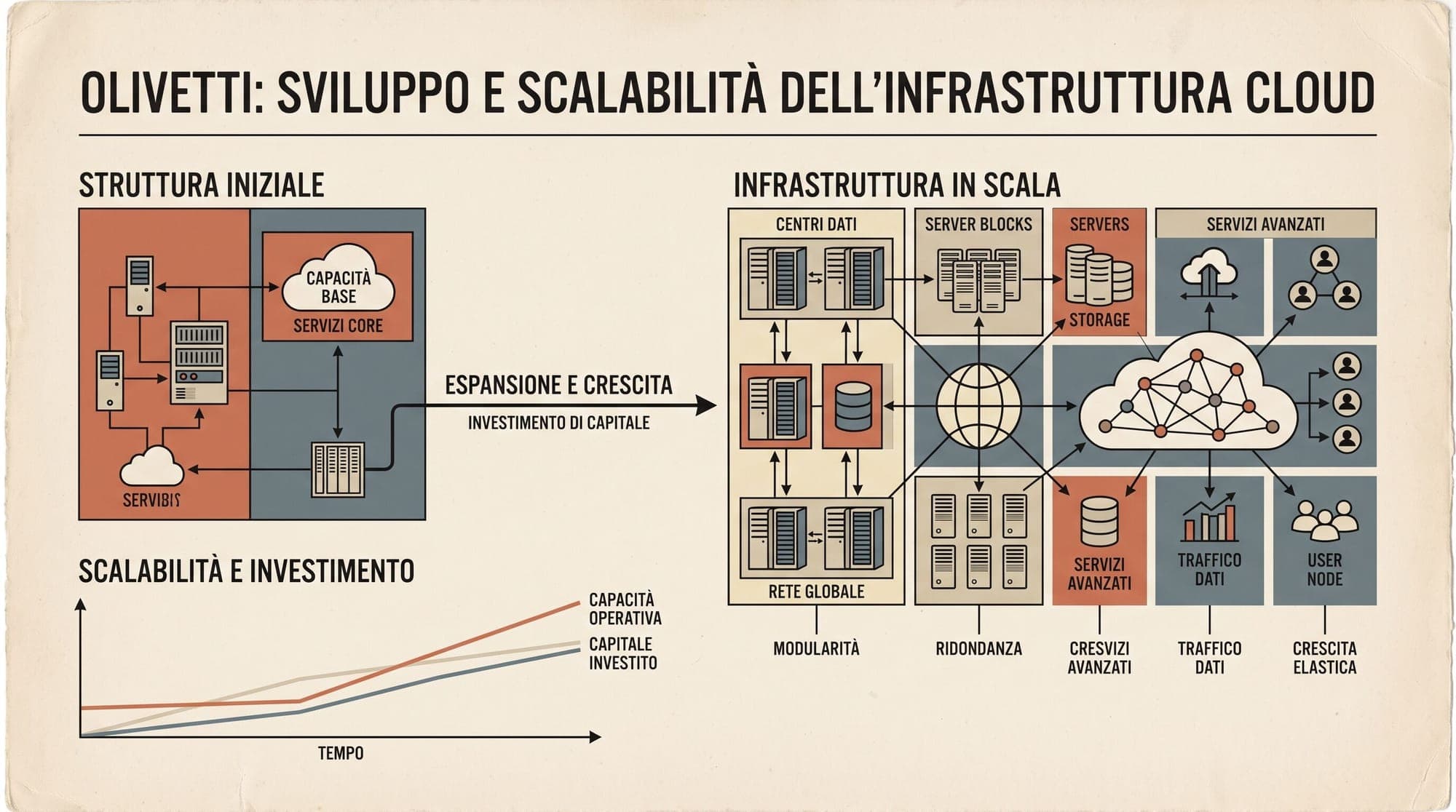
Lambda Cloud Infrastructure Architecture

Capital Acceleration Across the Neocloud Sector

Lambda operates in the emerging neocloud category alongside specialized compute operators such as CoreWeave, Nebius, and Crusoe. These companies rent dedicated GPU clusters, InfiniBand networking, and low-latency storage fabrics to foundation model developers and enterprises seeking alternatives to hyperscalers like AWS, Microsoft Azure, and Google Cloud.

The capital requirements for scaling specialized AI infrastructure have triggered substantial debt and equity operations across the sector. Earlier this month, Lambda arranged a $917 million leveraged loan facility to support a $1.3 billion hardware lease agreement for Nvidia GPUs. The proposed $3 billion equity injection would further strengthen the company's balance sheet ahead of a targeted initial public offering in 2027.

Hardware Commitments and Competitive Dynamics

Backed by Nvidia, Lambda has steadily expanded its fleet of H100, H200, and Blackwell GPU servers across multi-tenant and reserved cloud deployments. The company offers on-demand clusters, colocation space, and bare-metal instances tailored for large-scale distributed training and high-throughput inference workloads.

As frontier AI labs scale parameter counts and context lengths, reliable hardware allocation and power provisioning have become primary bottlenecks. Securing multi-billion-dollar financing rounds enables neocloud providers to commit capital to multi-year data center capacity leases and power interconnect agreements before customer deployments go live.


Sources

Written by

More to read

  • Disaggregated Prefill and Decode in Production LLM Serving: Architecture, Network KV Cache Migration, Chunked Prefill Trade-Offs, and Asymmetric Hardware Economics

    Large language model serving systems have historically treated transformer execution as a homogeneous sequence of forward passes over a single unified GPU pool. Under continuous batching engines, incoming requests execute their prompt evaluation (prefill) and autoregressive token generation (decode) on the exact same accelerators, co-locating both phases within shared iteration batches. While continuous batching improves GPU compute utilization compared to static batching, co-locating prefill a

    1 min
  • Direct Preference Optimization: Mathematical Derivation, Implicit Reward Formulation, and the Mechanics of RL-Free Alignment

    Direct Preference Optimization: Mathematical Derivation, Implicit Reward Formulation, and the Mechanics of RL-Free Alignment Aligning autoregressive large language models with human preferences has traditionally relied on Reinforcement Learning from Human Feedback (RLHF). In the standard formulation popularized by InstructGPT and related post-training regimes, alignment requires a multi-stage pipeline: supervised fine-tuning (SFT), training a separate reward model on pairwise comparison data, a

    1 min
  • Hugging Face Introduces gr.Workflow to Turn AI Pipelines into Visual Graphs and REST APIs

    Hugging Face has released gr.Workflow, a native extension to the Gradio framework designed to convert multi-stage artificial intelligence pipelines into interactive node graphs, visual user interfaces, and deployable REST APIs. Modern machine learning applications increasingly rely on compound pipelines that chain heterogeneous models: generating text via large language models, feeding prompts into diffusion systems, processing outputs through background removal or audio synthesis models, and a

    1 min

