OpenAI Adds Apple Messages Integration to ChatGPT Desktop on macOS

OpenAI has released an official Apple Messages plugin for the ChatGPT desktop application on macOS, enabling the conversational model to interact directly with local message databases across all subscriber tiers, including ChatGPT Work and Codex workspaces. The integration allows users to query past text records, generate draft responses, and dispatch outgoing iMessage, SMS, and RCS communications directly from the ChatGPT desktop interface. Architecture and Local Execution Unlike cloud-brid

1 min
OpenAI Adds Apple Messages Integration to ChatGPT Desktop on macOS

OpenAI has released an official Apple Messages plugin for the ChatGPT desktop application on macOS, enabling the conversational model to interact directly with local message databases across all subscriber tiers, including ChatGPT Work and Codex workspaces.

The integration allows users to query past text records, generate draft responses, and dispatch outgoing iMessage, SMS, and RCS communications directly from the ChatGPT desktop interface.

Architecture and Local Execution

Unlike cloud-bridged messaging connectors that ingest conversation histories into remote databases, the Apple Messages plugin operates entirely on the local host machine. According to OpenAI, the plugin interfaces with the native macOS Messages SQLite store directly on device and does not generate an off-premises index of a user's messaging logs.

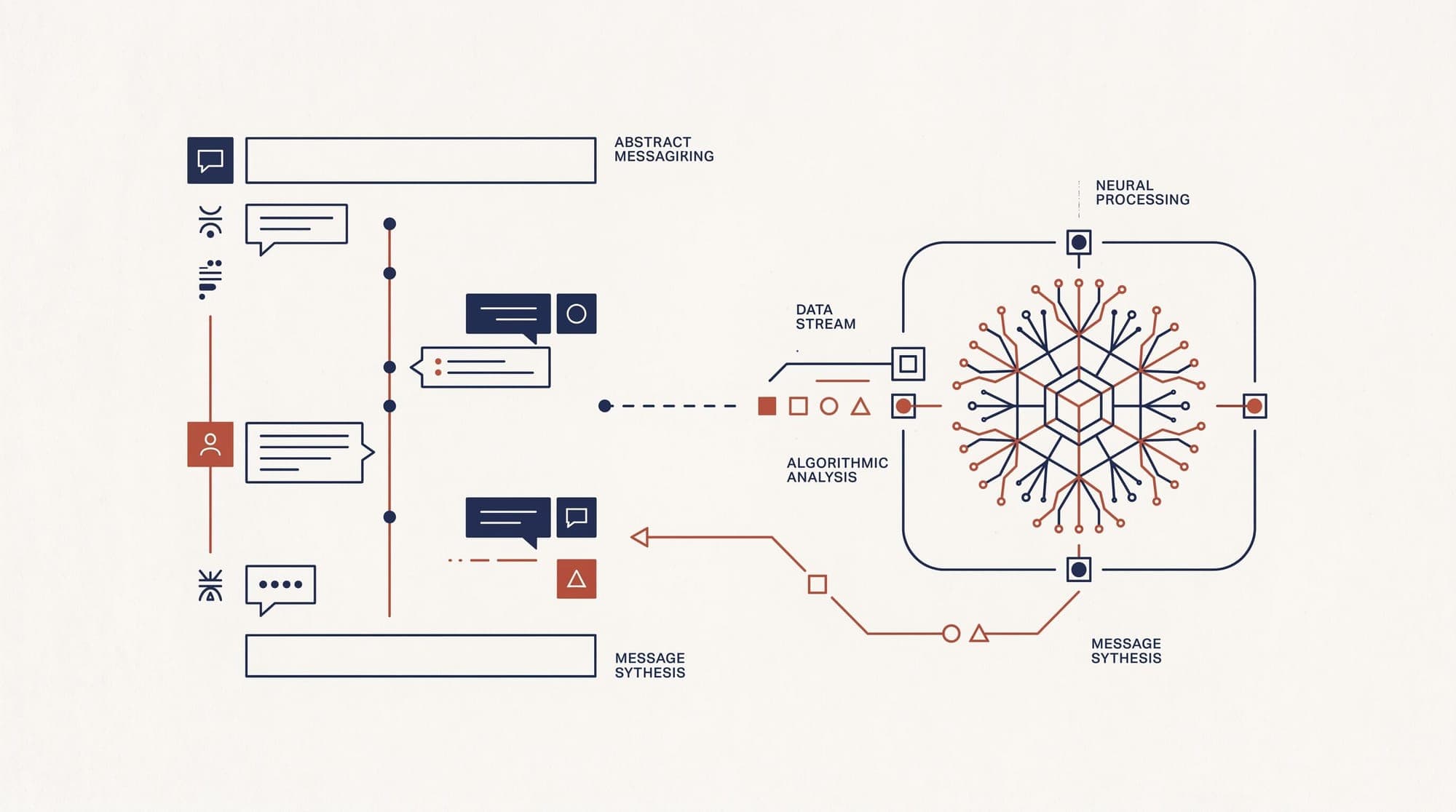
Local desktop message filtering and verification gateway

The tool acts strictly as a client-side execution endpoint. It cannot be queried remotely through an incoming iMessage to trigger background model runs; all interactions must originate from an active ChatGPT desktop, Codex, or ChatGPT Work session.

Permission Boundaries and Task Automation

To prevent unauthorized message transmission, the integration defaults to explicit per-action confirmation prompts. Every drafted dispatch requires active user approval before the native application sends the text.

However, OpenAI provides configuration flags for persistent approval, allowing automated workflows to send messages autonomously. The documentation notes specific caveats regarding background tasks where suppressed confirmation prompts remove the manual inspection barrier before outbound messages reach contacts.

Users can revoke database access or reset plugin permissions directly within the macOS application settings at any point.


Sources

Written by

More to read

  • TVA Board Approves Dedicated Data Center Rate Class to Shield Households from AI Compute Costs

    The Board of Directors of the Tennessee Valley Authority (TVA) voted on August 20, 2026, to establish a dedicated wholesale rate class for large data centers. The tariff restructuring is designed to insulate residential consumers and small commercial businesses from the escalating capital expenditures required to expand the power grid for artificial intelligence workloads. Approved during the board's quarterly meeting in Memphis, Tennessee, the package introduces targeted tariffs for facilities

    1 min
  • Fast Model Weight Loading in Production: Safetensors, Tensorizer, and Direct GPU Deserialization

    Fast Model Weight Loading in Production: Safetensors, Tensorizer, and Direct GPU Deserialization In modern large language model inference clusters, cold start latency is rarely bounded by GPU compute allocation. Instead, the operational bottleneck centers on storage I/O and weight deserialization. As foundation models scale from 70 billion to 405 billion parameters, raw weight footprints range from 140 GB to over 800 GB in standard 16-bit precision. On naive serving stacks, deserializing these

    1 min
  • Maximal Update Parametrization (muP): How Tensor Programs Enable Zero-Shot Hyperparameter Transfer in LLM Pre-Training

    Pre-training a frontier large language model requires hundreds of thousands of GPU hours and millions of dollars in compute. At that scale, traditional hyperparameter tuning is financially and operationally impossible: teams cannot sweep learning rates, weight initializations, or optimizer betas across multiple 70B parameter runs to find the loss minimum. Historically, practitioners relied on ad-hoc heuristic extrapolation or manual guesses from small runs, often leading to sub-optimal loss curv

    1 min

