
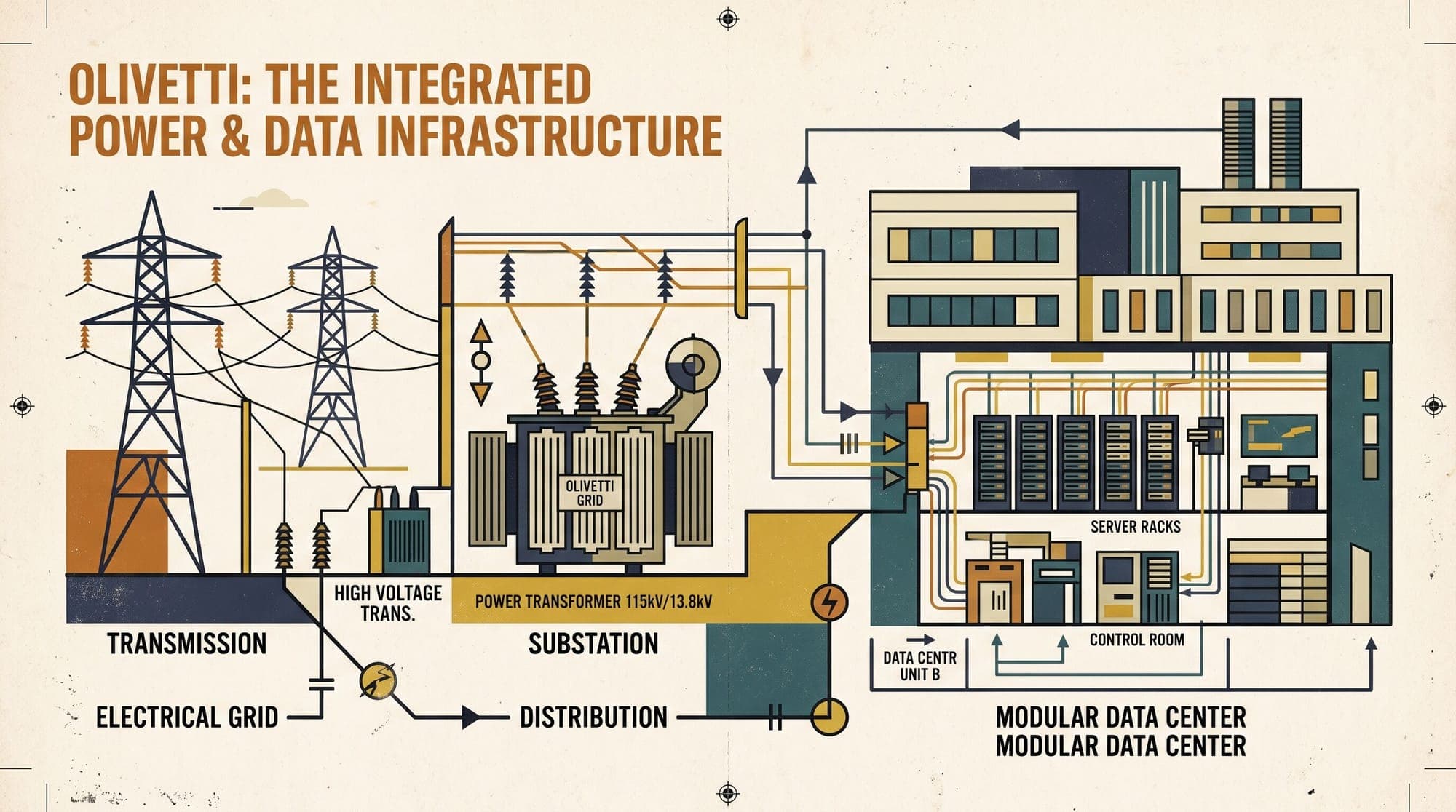
The Board of Directors of the Tennessee Valley Authority (TVA) voted on August 20, 2026, to establish a dedicated wholesale rate class for large data centers. The tariff restructuring is designed to insulate residential consumers and small commercial businesses from the escalating capital expenditures required to expand the power grid for artificial intelligence workloads.
Approved during the board's quarterly meeting in Memphis, Tennessee, the package introduces targeted tariffs for facilities requiring substantial electrical capacity, adopts the utility's 2026 Integrated Resource Plan (IRP), and authorizes a fiscal year 2027 budget exceeding $13 billion in capital deployment through FY2029.
Mechanics of the Data Center Rate Structure
Under the new tariff schedule, which takes effect on October 1, 2026, any new or expanding data center facility with an electrical demand exceeding 5 megawatts (MW) will be placed in a dedicated rate class. Central to this tariff is a new Capacity Commitment Charge designed to directly recover the incremental transmission and generation capital expenses incurred to serve high-density computing facilities.
TVA projects that the Capacity Commitment Charge will result in an average net billing increase of approximately 10% for data center operators. To prevent acute operational disruptions, the utility will phase in this charge over three consecutive fiscal years.

In addition to the commitment charge, the board enacted a Power Interruption Provision. This mechanism applies to operators seeking grid interconnection prior to the completion of dedicated physical generation and transmission infrastructure. The provision ensures that grid reliability for existing ratepayers is not compromised during peak demand periods while new energy assets are under construction.
The policy also aligns with the voluntary Ratepayer Protection Pledge signed by TVA on July 23, 2026. Under the framework, hyperscalers and frontier AI labs developing massive compute clusters agree to fund required transmission upgrades directly, contract for dedicated supplemental power generation, and assume financial liability for specialized infrastructure regardless of fluctuating utilization.
Long-Term Resource Planning and Multi-Gigawatt Expansion
The decision follows unprecedented load growth projections across the seven-state Tennessee Valley region. According to TVA data, data centers represented nearly 20% of the utility's industrial load in early 2026, with electricity consumption from computing infrastructure projected to double by 2030.
To meet this demand, the newly approved 2026 Integrated Resource Plan models a requirement of 11 to 32 gigawatts (GW) of additional generation capacity across the service territory by 2040. The modeled supply portfolio includes:
- 7 to 26 GW of natural gas generation assets
- Up to 5 GW of advanced and conventional nuclear energy
- 2 to 5 GW of renewable energy installations
- 1 to 5 GW of grid-scale battery storage
TVA currently has 4,120 MW of utility-owned generation assets under active construction, with another 3,000 MW undergoing technical and financial evaluation. Active projects include a 1,500 MW natural gas complex in Kingston, Tennessee, a 1,450 MW combined-cycle plant in Cumberland, Tennessee, additional combustion turbine units in Mississippi and Brownsville, Tennessee, a 200 MW aeroderivative unit in Memphis, 100 MW of solar capacity in Kentucky, and a 20 MW battery storage installation in Vonore, Tennessee.
TVA officials noted that the utility's current 12-month rolling residential electricity rate of 13.42 cents per kilowatt-hour sits well below the national top-quartile median of 18.76 cents. The dedicated tariff structure is intended to preserve this cost advantage for the region's 10 million residents while accommodating regional data center buildouts.
Sources
- TVA Board Protects Consumers, Strengthens Reliability Amid Rising Power Demand
- TVA Board Creates Data Center Rate to Shield Households From AI Power Costs (Unite.AI)
- TVA Board Presentation Materials (August 20, 2026)
- Tennessee Valley Authority Sets New Data Center Electricity Rate (Knoxville News Sentinel)



