
title: "OKX and Goldman Sachs Cut Off Hong Kong Staff From Anthropic's Claude AI" slug: "okx-and-goldman-sachs-cut-off-hong-kong-staff-from-anthropics-claude-ai" feature_image: "https://cms.llms.blog/content/images/2026/08/okx-goldman-claude-hong-kong.png" status: "published" tags: ["AI Policy", "Anthropic", "Geopolitics", "Enterprise AI", "LLM"]
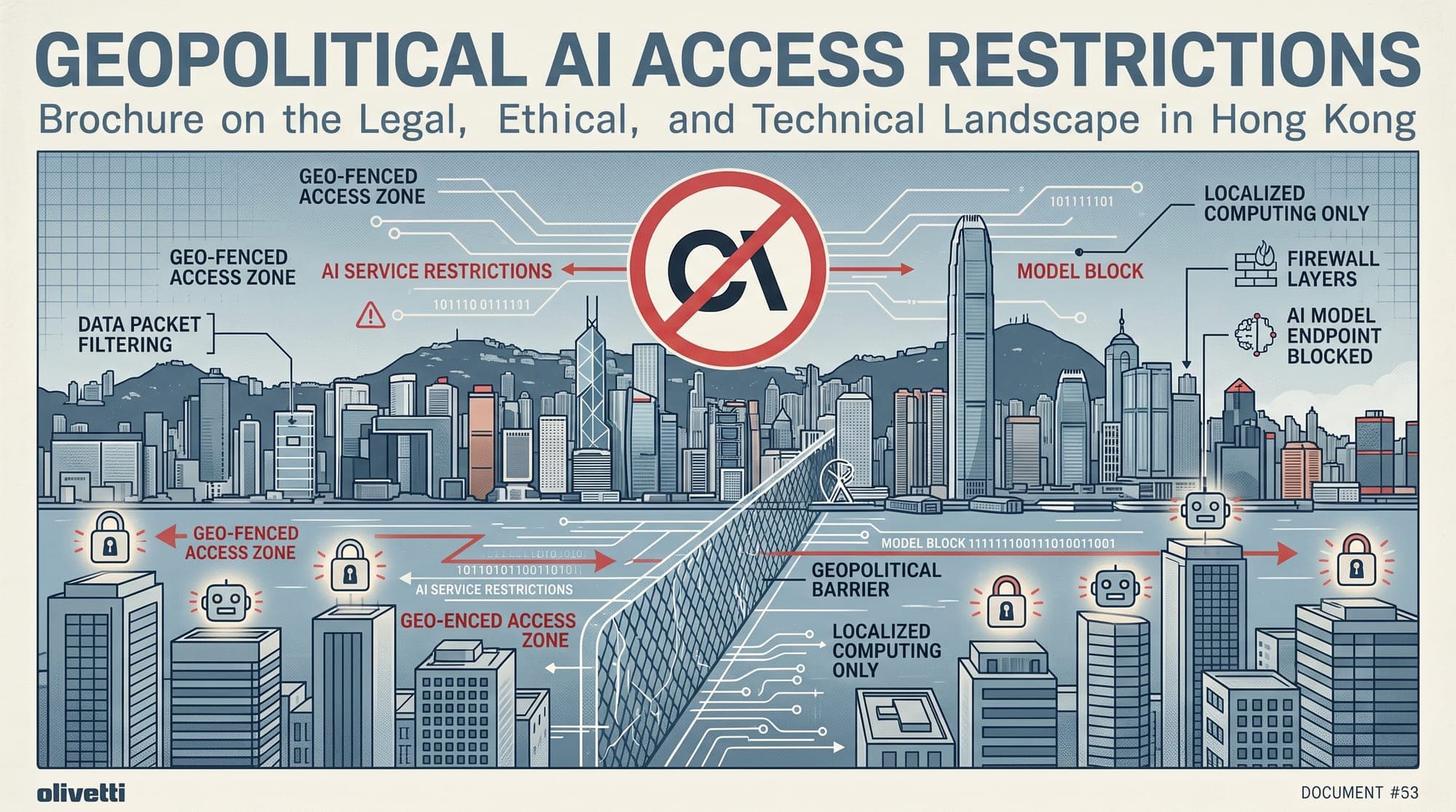
Crypto exchange OKX has restricted access to Anthropic's Claude model for employees based in Hong Kong or traveling through China after its corporate account was briefly suspended, according to Bloomberg. The restriction comes despite OKX making AI proficiency part of employee performance evaluations and encouraging workers to integrate AI tools into daily workflows.
OKX stopped providing Claude access to staff in the region in early August following the suspension, Bloomberg reported. Internal messages reviewed by the publication told employees traveling through Hong Kong or China that OKX would not support attempts to access Claude using virtual private networks, reminding staff that Claude can only be used from supported regions.

Anthropic's policies do not permit access to Claude in Hong Kong or China, the company confirmed in an emailed response. "We recently became aware that access to Claude by certain OKX employees based in Hong Kong may not have been fully aligned with Anthropic's geographic access policies," OKX said in a statement. "We will restrict Claude access for Hong Kong-based employees where required and route their AI requests to other appropriate models."
This follows a similar move by Goldman Sachs, which removed access to Anthropic's Claude for its bankers in Hong Kong earlier this year. Reuters reported in April that Goldman concluded its employees in Hong Kong — its main Asia-Pacific business hub — should not be able to use any Anthropic products. Hong Kong does not appear on Anthropic's list of markets where its API and Claude.ai are officially accessible.
The restrictions reflect growing friction between the U.S. and China over AI technology, data security, and access to advanced computing tools. While AI models built by U.S. firms are unavailable in mainland China, Hong Kong has largely remained a market where some models operate, with usage limits set by the U.S. companies themselves. Anthropic's spokesperson told the Financial Times that its Claude models had never been officially "supported" in Hong Kong.
The Hong Kong Monetary Authority (HKMA) has contacted "a range of major banks" to understand developments around Anthropic's latest model and remind them to update risk assessments and take appropriate measures.
OKX spends between $6 million and $8 million per month across several major LLM providers, according to Bloomberg. Employees have access to both Claude and OpenAI's ChatGPT, though Claude is viewed internally as having greater impact on productivity.
Sources
- Bloomberg, "Crypto Firm OKX Bars Claude Use in Hong Kong After Suspension," August 19, 2026. https://www.bloomberg.com/news/articles/2026-08-19/crypto-firm-okx-bars-claude-use-in-hong-kong-after-suspension
- Reuters, "Goldman cuts access to Anthropic's Claude for Hong Kong bankers, source says," April 29, 2026. https://finance.yahoo.com/sectors/technology/articles/goldman-sachs-bars-hong-kong-bankers-from-using-anthropic-ai-source-says-005320282.html



