
Nvidia is in discussions to participate in a funding round for AI training data marketplace Mercor that would value the three-year-old startup at $20 billion, according to reporting from The Information and Bloomberg.
The transaction would double Mercor's valuation from its $10 billion Series C round closed in October 2025. It also signals an expanding capital allocation strategy from Nvidia, moving beyond compute infrastructure and cloud hardware into the upstream data curation layers powering frontier foundation models.
Commercial Tie-Ups and Nemotron Data Pipelines
The equity discussions follow substantial commercial integration between the two companies. In the prior quarter, Nvidia paid Mercor tens of millions of dollars for specialized training and evaluation datasets spanning technical domains, including legal analysis, finance, and advanced sciences.
Nvidia integrated Mercor's expert-generated data into its two latest Nemotron open-weight model releases. To handle Nvidia's throughput requirements, Mercor has deployed dedicated internal teams focused nearly full-time on curating and formatting datasets tailored to Nvidia's post-training and alignment pipelines.

Revenue Metrics and Market Structure
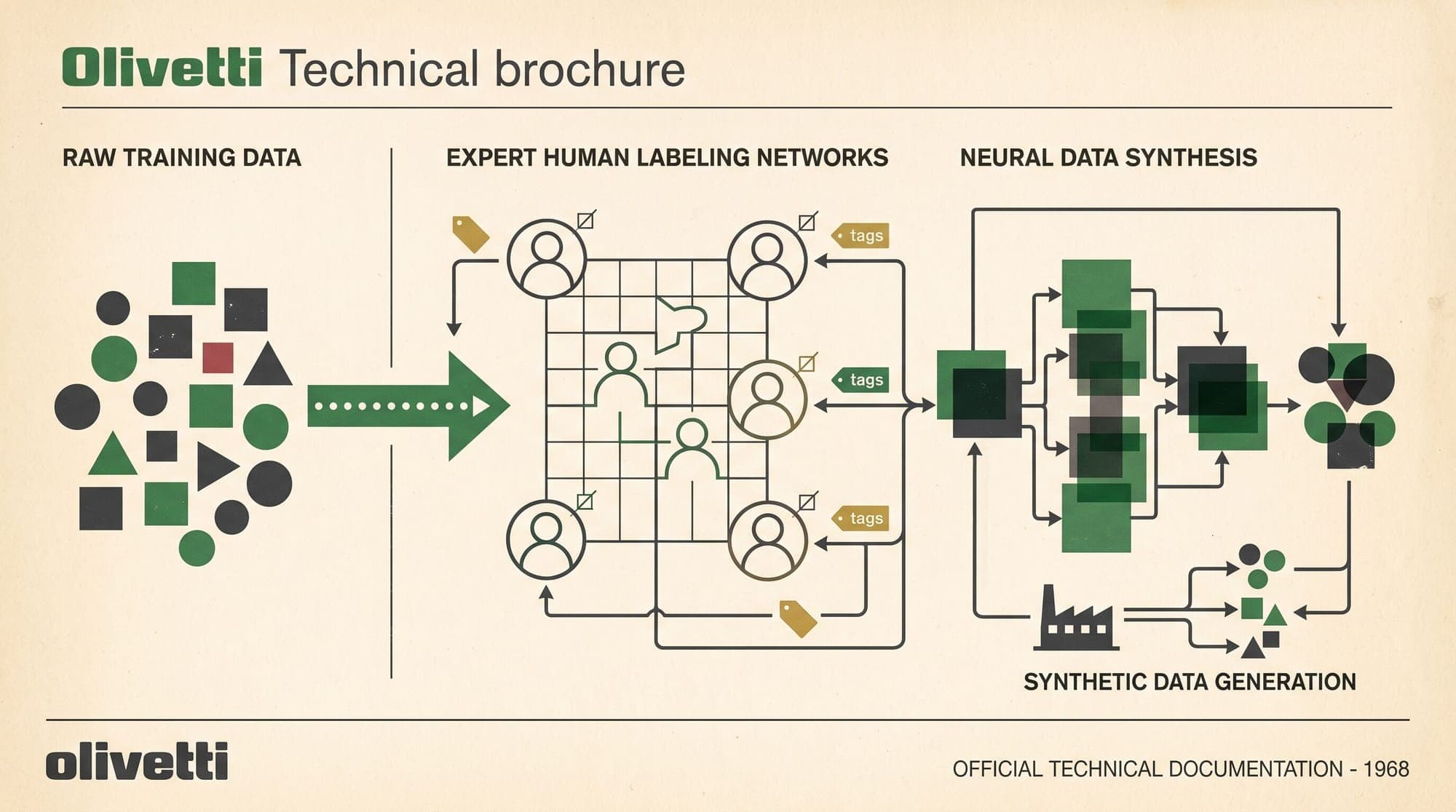
Mercor operates a marketplace connecting frontier AI laboratories with domain specialists who evaluate model outputs, generate complex synthetic reasoning trajectories, and author high-difficulty benchmark problems. Alongside Nvidia, Mercor's customer roster includes OpenAI, Google, and Anthropic.
In June, Mercor reported that its annualized gross billings reached $2 billion, doubling over a four-month period. Because human contractors take between 60% and 70% of gross billings, industry analysts estimate Mercor's net annualized revenue run rate at roughly $600 million to $800 million. At a $20 billion valuation, the proposed round prices the business at approximately 25x to 33x net revenue.
Mercor has also moved to consolidate adjacent tooling, acquiring AI agent training platform Deeptune to expand its benchmarking and reinforcement learning environments.
Nvidia's Expanding Upstream Portfolio
While Nvidia historically focused venture capital on GPU compute customers and specialized cloud operators such as CoreWeave and Nebius, the company has increasingly deployed capital across the software and data supply chain.
As frontier labs shift more compute from pre-training toward reinforcement learning and test-time verification, demand for expert-verified data and reasoning environments has surged. By securing equity and operational priority with top-tier data suppliers, Nvidia aims to protect the pipeline of specialized data required to train its proprietary and open-source models.



