Natural Secures 00M Credit Facility to Scale Payments and Lending for AI Agents

San Francisco-based fintech startup Natural has secured a debt facility of up to $100 million from Upper90 Capital Management to fund credit and transaction settlement for autonomous AI agents. The debt financing arrives one month after the company closed a $30 million Series A equity round led by Forerunner Ventures, bringing its total equity raised past $40 million. Founded by Kahlil Lalji, Eric Wang, and Walt Leung, Natural is developing banking and payments rails tailored for autonomous sof

2 min
Natural Secures 00M Credit Facility to Scale Payments and Lending for AI Agents

San Francisco-based fintech startup Natural has secured a debt facility of up to $100 million from Upper90 Capital Management to fund credit and transaction settlement for autonomous AI agents. The debt financing arrives one month after the company closed a $30 million Series A equity round led by Forerunner Ventures, bringing its total equity raised past $40 million.

Founded by Kahlil Lalji, Eric Wang, and Walt Leung, Natural is developing banking and payments rails tailored for autonomous software workflows. The company partners with Column N.A. to provide FDIC-insured accounts and multi-bank settlement rails.

Debt vs. Equity in Agentic Commerce

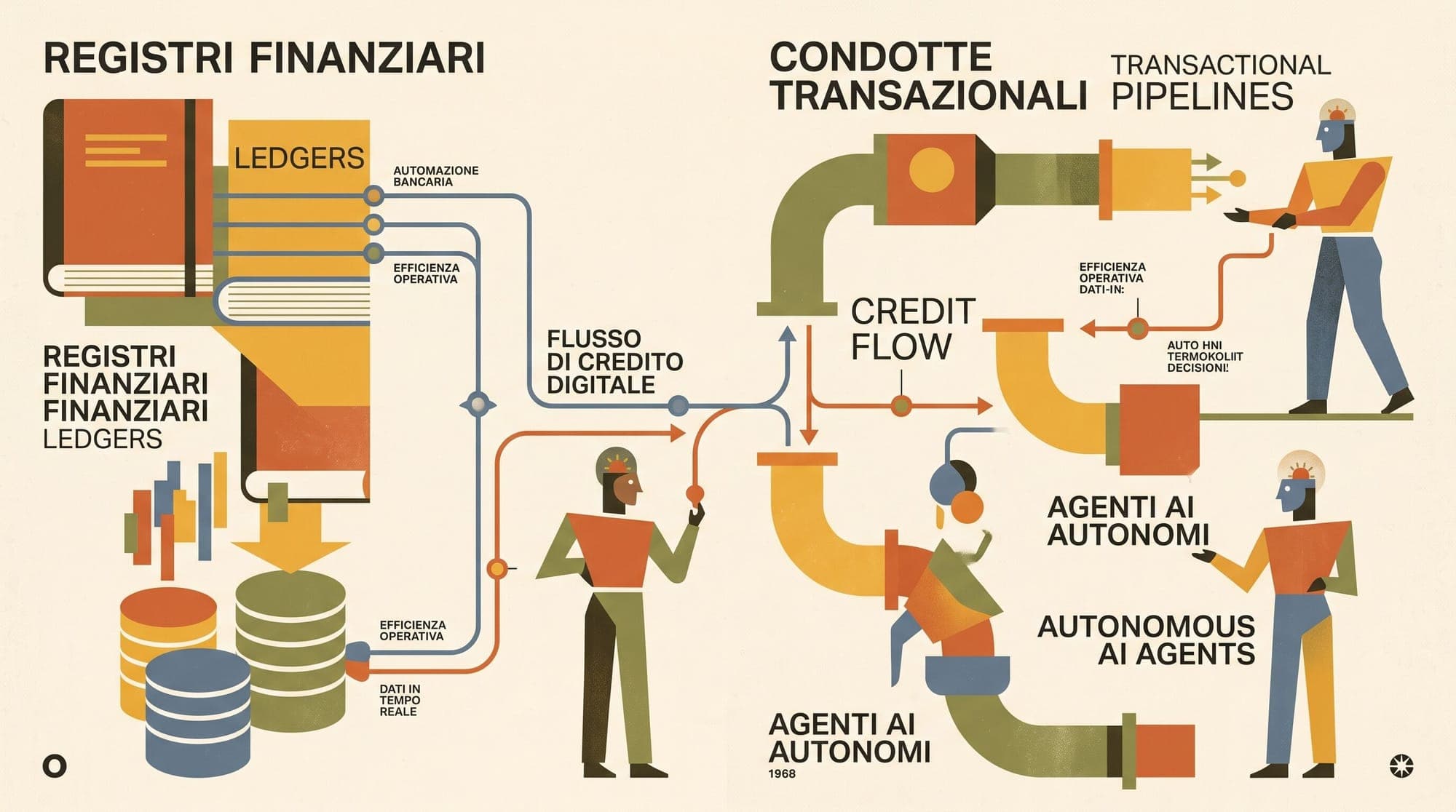
The $100 million Upper90 credit facility addresses a structural separation in financial infrastructure: equity funding supports software engineering and product development, while credit facilities warehouse lending exposure and pre-settlement liquidity.

As autonomous AI agents execute programmatic purchases, micro-transactions, and automated SaaS billing, transaction volumes require balance sheet backing before end-of-day bank clearing. The credit facility allows Natural to scale working capital and credit lines for enterprise-deployed agents without incurring equity dilution.

Natural AI Agent Payment Architecture

Current Product Portfolio and Q4 Roadmap

Natural currently provides six core products in general availability:

  • Wallets: Programmable accounts designed for agent spending limits and operational isolation.
  • Vaults: One-way ingress accounts where agents can deposit customer revenue without withdrawal authority.
  • Pay & Request: Bidirectional invoice and checkout APIs for automated transactions.
  • Transfer: Multi-bank clearing and funds routing.
  • Connect: Embedded marketplace infrastructure for developer platforms.

The company plans to deploy virtual cards and payment acceptance in late 2026, followed by two balance-sheet-backed products in Q4: Credit, which grants programmatic credit lines directly to autonomous agent runtimes, and Charge, an automated metering system for per-API-call billing against wallet balances.

Ecosystem Backing

Natural's cap table features institutional backing from Forerunner, Human Capital, Abstract, and Bridge, along with corporate and angel investment from operators at Brex, Mercury, Vercel, Notion, Increase, and Browserbase.

The Upper90 debt structure mirrors broader capital allocation trends across AI infrastructure, where credit lines increasingly finance heavy capital requirements, from sovereign data center expansions to autonomous transaction clearing.


Sources

Written by

More to read

  • Benchmarking LLM Inference in Production: Architecture, Metrics, and Tooling Across AIPerf, GuideLLM, and LLMPerf

    Traditional HTTP load-testing tools such as Apache Bench, wrk, and Locust evaluate systems using uniform request-response cycles. These tools send a payload, wait for the full response, and compute metrics such as requests per second (RPS) and round-trip latency percentiles. For stateless REST APIs, this model aligns directly with user experience. Large language model (LLM) serving fundamentally breaks this abstraction. An inference request is not an atomic computation. It consists of two disti

    1 min
  • Warmup-Stable-Decay (WSD): How Decoupled Annealing Replaced Cosine Decay in Modern LLM Pre-Training

    For years, foundation model pre-training adhered to a standard optimization convention: linear learning rate warmup followed by a full-horizon cosine decay. Adopted across GPT-3, PaLM, Chinchilla, and LLaMA, cosine annealing provided stable convergence across diverse parameter scales. However, it introduced a severe structural limitation: the learning rate schedule is rigidly tied to a fixed, upfront token budget. If a team decides to extend pre-training mid-run, branch into domain-specific vari

    1 min
  • Veeda AI Raises 0M+ Seed Backed by Khosla and Radical for Physical AI World Models

    Veeda AI, a Toronto-based foundation model startup established by former Nvidia AI research executive Sanja Fidler, has raised more than $90 million in seed funding. The round was backed by Khosla Ventures and Radical Ventures, marking one of the largest seed financings recorded in Canada. Corporate filings reveal that the company, incorporated in June 2026 as Veeda Innovation, issued 60.6 million seed shares priced at $1 each in late July. Concurrent with the share issuance, Veeda added Radica

    1 min

