
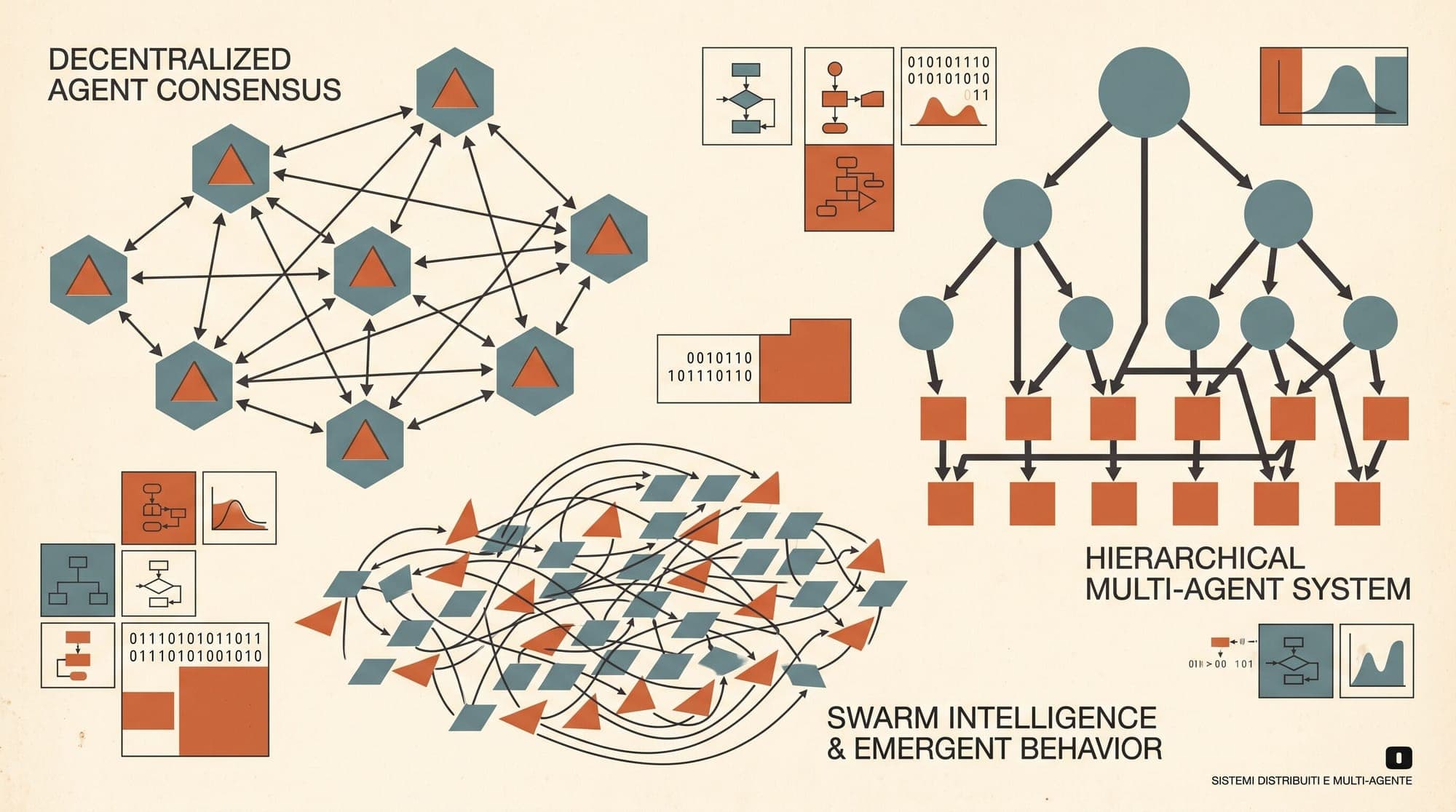
Deploying autonomous multi-agent systems to production exposes the fundamental limitations of single-turn prompting and linear DAG chains. Real-world agent workflows require cyclical execution, durable state persistence across hours or days, reliable human-in-the-loop interrupts, and fault-tolerant error recovery.
Four primary frameworks have emerged as the leading orchestration layers in 2026: LangGraph, Microsoft AutoGen, CrewAI, and LlamaIndex Workflows. While each framework enables multi-agent collaboration, their foundational execution models, concurrency primitives, and state durability guarantees differ substantially.

Core Execution Topologies
The fundamental architectural choice of an orchestration engine determines how agents communicate, branch, and loop.
1. LangGraph: Cyclical Pregel Graphs
LangGraph models agent systems as explicit directed graphs based on Google's Pregel graph computing model. Nodes represent computational functions or agent invocations, while edges define transition logic.
- State Channels and Reducers: All graph state is defined via typed schemas (such as Pydantic models or Python TypedDicts). When parallel nodes write to the same state channel, user-defined reducer functions resolve conflicts deterministically (for example, appending messages to an existing conversation history).
- Super-step Barrier Synchronization: Execution proceeds in discrete super-steps. In each step, active nodes run concurrently, and state updates are collected before advancing to subsequent nodes. This prevents race conditions in complex branching topologies.
2. Microsoft AutoGen: Event-Driven Actor Model
The AutoGen 0.4 architecture represents a complete rewrite around the Actor model of concurrent computing.
- Isolated Actor Mailboxes: Every agent in AutoGen Core is an isolated actor possessing private state and communicating strictly via asynchronous message passing over a shared message bus.
- Decoupled Runtimes: Agents do not maintain synchronous references to each other. Instead, they publish and subscribe to topic-based message streams, allowing agents to execute across distributed infrastructure without shared-memory locks.
3. CrewAI: Role-Based Hierarchical Task Forces
CrewAI structures agent interaction around human organizational metaphors: Agents, Tasks, and Crews.
- Process Modes: CrewAI coordinates work through either
Process.sequential(linear task progression) orProcess.hierarchical(a manager LLM dynamically delegates subtasks to specialist worker agents and reviews their outputs). - Opinionated Role Abstraction: Agents are defined with explicit
role,goal, andbackstoryparameters, optimizing rapid deployment of specialized multi-agent teams over low-level control flow customization.
4. LlamaIndex Workflows: Event-Driven Step Functions
LlamaIndex Workflows provides an event-driven framework that eliminates explicit graph compilation in favor of pure Python async decorators.
- Event Propagation via
@step: Steps within a workflow are annotated functions that listen for specific typedEventinstances and emit new events upon completion. - Native Data Ingestion Binding: Workflows integrate directly with LlamaIndex data loaders, document parsers, and vector indices, making it optimized for data-intensive retrieval and parsing pipelines.
State Persistence and Checkpointing
State durability determines whether an agentic system can survive process crashes, deploy updates without data loss, or pause execution for external approval.
- LangGraph Checkpointing: LangGraph implements first-class state checkpointing via BaseCheckpointSaver interfaces, supporting memory, SQLite, PostgreSQL (
AsyncPostgresSaver), and Redis. The runtime saves a serialized snapshot of state, pending channel writes, and task metadata at every super-step. This enables point-in-time rewind, time-travel debugging, and state fork capabilities. - AutoGen Snapshotting: AutoGen 0.4 provides actor-level serialization where individual agent states and message logs can be exported and reloaded. However, distributed state consistency across asynchronous topic streams requires external coordination mechanisms.
- CrewAI Memory Stores: CrewAI provides built-in short-term memory (Chroma-backed RAG over task context), long-term memory (SQLite storage of historical task outcomes), and entity memory. Execution state itself remains primarily in-memory during a run.
- LlamaIndex Workflows Context: Workflows maintain a shared
Contextobject across step executions. Event queues and intermediate context variables operate in memory by default, with custom serialization hooks required for external persistence across long intervals.
Human-in-the-Loop (HITL) and Interrupt Mechanics
Enterprise production environments require safety boundaries where agents must request human authorization before performing irreversible actions, such as database updates or financial transactions.
# LangGraph dynamic interrupt pattern
from langgraph.types import interrupt

def payment_execution_node(state: OrderState) -> OrderState:
    # Execution halts here, serializing state to the configured checkpointer
    approval = interrupt({
        "action": "execute_transfer",
        "amount": state["total_amount"],
        "recipient": state["vendor_id"]
    })

    if approval.get("status") == "approved":
        execute_wire(state["total_amount"], state["vendor_id"])
        return {"payment_status": "completed"}
return {"payment_status": "rejected"}- LangGraph Interrupts: LangGraph provides explicit interrupt() primitives. When an interrupt is reached, the graph saves a checkpoint to storage and pauses execution without consuming active compute threads. Resuming simply requires invoking the graph thread with the human response.
- AutoGen UserProxy: AutoGen handles human intervention via
UserProxyAgentinstances or input callback handlers that inject messages into the actor's asynchronous queue. - CrewAI Human Feedback: CrewAI allows tasks to set
human_input=True. When reached, the execution pauses synchronously to request CLI or webhook input before the agent proceeds to downstream tasks. - LlamaIndex Event Yielding: Workflows pause by awaiting external
HumanResponseEventinstances, allowing asynchronous systems to stream prompts to user interfaces and resume upon receipt.
Architectural Tradeoffs and Selection Criteria
Choosing an orchestration framework requires balancing architectural flexibility, cognitive overhead, and operational reliability.
Choose LangGraph If:
- You require deterministic, auditable control flows with complex branching, looping, and multi-step validation.
- Your application demands durable state persistence, time-travel debugging, and fault-tolerant recovery from intermediate steps.
- You need deep human-in-the-loop integration with long-lived session threads.
Choose Microsoft AutoGen If:
- You are designing distributed, event-driven multi-agent simulations where agents run across separate services or physical machines.
- Your system relies on dynamic peer-to-peer conversations, negotiation protocols, or emergent multi-agent debate.
- You are standardizing on the Microsoft AI ecosystem with cross-language Python and .NET agent runtimes.
Choose CrewAI If:
- You need to quickly assemble role-based agent task forces (such as researcher, writer, and editor pipelines) with minimal boilerplate.
- Your workflows follow straightforward sequential or manager-delegated hierarchical structures.
- You want turn-key access to broad tool libraries and built-in contextual memory abstractions.
Choose LlamaIndex Workflows If:
- Your application is centered on advanced document parsing, complex RAG architectures, and multimodal data extraction.
- You prefer event-driven step functions in pure Python without maintaining explicit graph compile steps.
- You already leverage LlamaIndex retrieval and index abstractions.
Sources
- LangGraph GitHub Repository and Pregel Architecture
- LangChain: Human-in-the-Loop Agents with Interrupts
- Microsoft AutoGen Core Architecture and Actor Model
- Microsoft AutoGen 0.4 Migration Guide
- CrewAI Official Documentation
- LlamaIndex Workflows Documentation and Event-Driven Guides
- Google Research: Pregel A System for Large-Scale Graph Processing



