
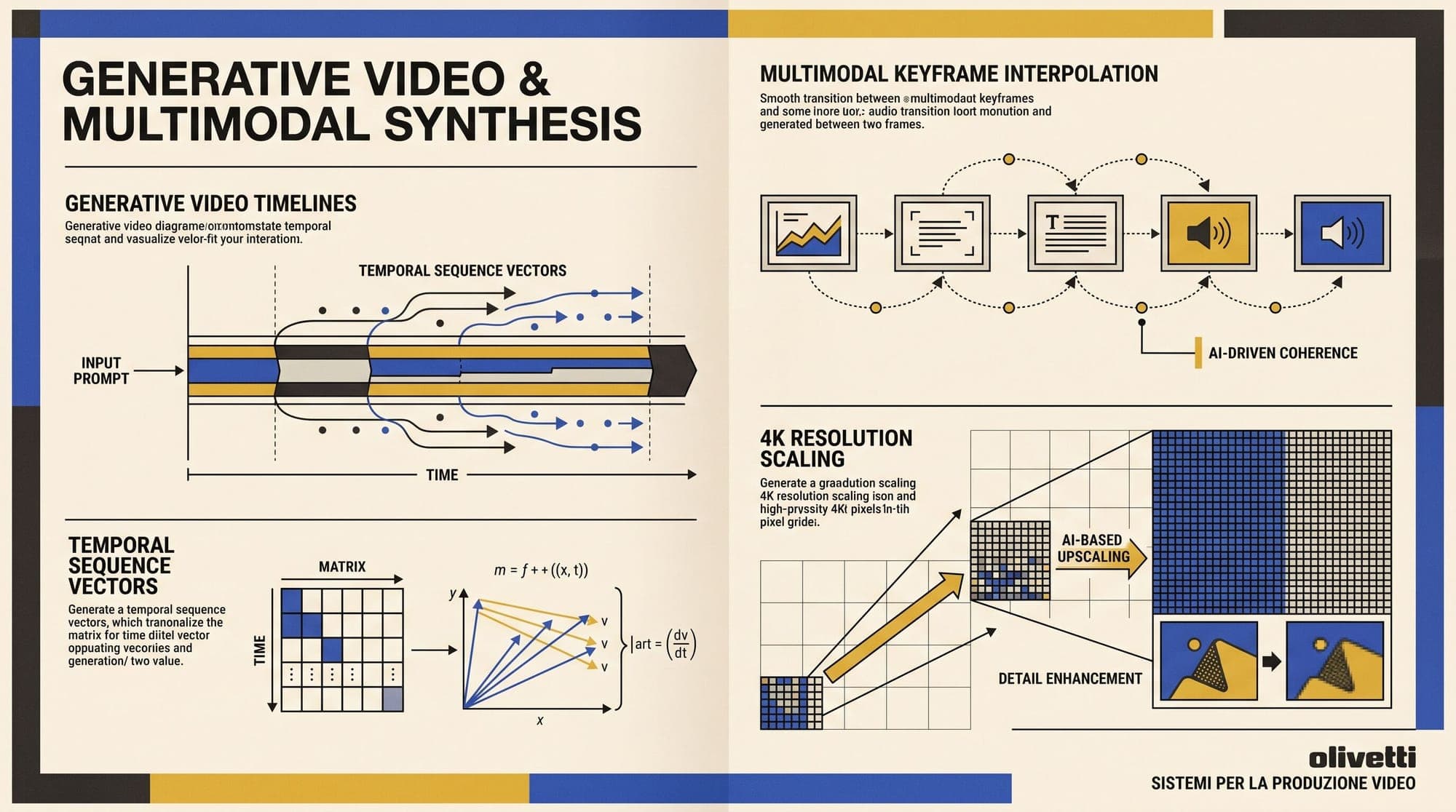
Google DeepMind has released Gemini Omni 1.1 Flash, an updated video generation and editing model designed for developer workflows and fine-grained creative control. The release introduces extended temporal context for scene continuation, keyframe-to-keyframe interpolation, lightweight draft rendering, and 4K output.
The model is accessible via the Gemini API in Google AI Studio (gemini-omni-1.1-flash), the Gemini Enterprise Agent Platform, Google Flow, and the consumer Gemini application.
Temporal Context Expansion and Scene Extension
Previous generative video architectures typically conditioned scene extensions on only the final second of existing footage, frequently causing visual drift, identity degradation, and abrupt lighting shifts. Omni 1.1 expands this temporal window, analyzing up to 10 seconds of preceding video context to maintain visual and motion consistency.
Key capabilities in temporal control include:
- Iterative Scene Extension: Developers can extend video sequences in 10-second increments up to a cumulative length of 40 seconds while preserving character identity and environmental geometry.
- First and Last Frame Interpolation: Users can define specific starting and ending keyframes; the model synthesizes continuous motion and camera transitions between them, enabling seamless loops and orbital camera movements without jump cuts.
- Multimodal Video References: Prompts can incorporate up to three seconds of external reference footage to guide character behavior, motion dynamics, and choreographic style across new generations.

Resolution Tiers and Serving Economics
To lower the cost of rapid prototyping and iterative storyboard testing, Google introduced a 360p preview tier alongside high-resolution production endpoints. According to DeepMind, the 360p draft mode generates outputs up to 60 percent faster than 720p baseline generation.
Pricing is structured on a per-second output basis:
| Resolution Tier | Gemini Omni 1.1 Flash Pricing (per second) | | :--- | :--- | | 360p Draft | $0.03 | | 720p Standard | $0.10 | | 1080p High Definition | $0.15 | | 4K Ultra High Definition | $0.30 |
API Integration and Tool Ecosystem
Omni 1.1 Flash is integrated into production software suites at launch, including Adobe Firefly and Figma Weave, where creative teams utilize keyframe interpolation and extension APIs for timeline-based asset generation.
In the Gemini API, extensions are managed via persistent interaction identifiers, allowing developers to chain generations programmatically by referencing previous output handles:
from google import genai

client = genai.Client()

interaction = client.interactions.create(
    model="gemini-omni-1.1-flash",
    previous_interaction_id=previous_video_interaction.id,
    input=[
        {"type": "text", "text": "Continue the scene with a continuous camera pull-back."}
    ],
    response_format={
        "resolution": "1080p",
    },
)


