
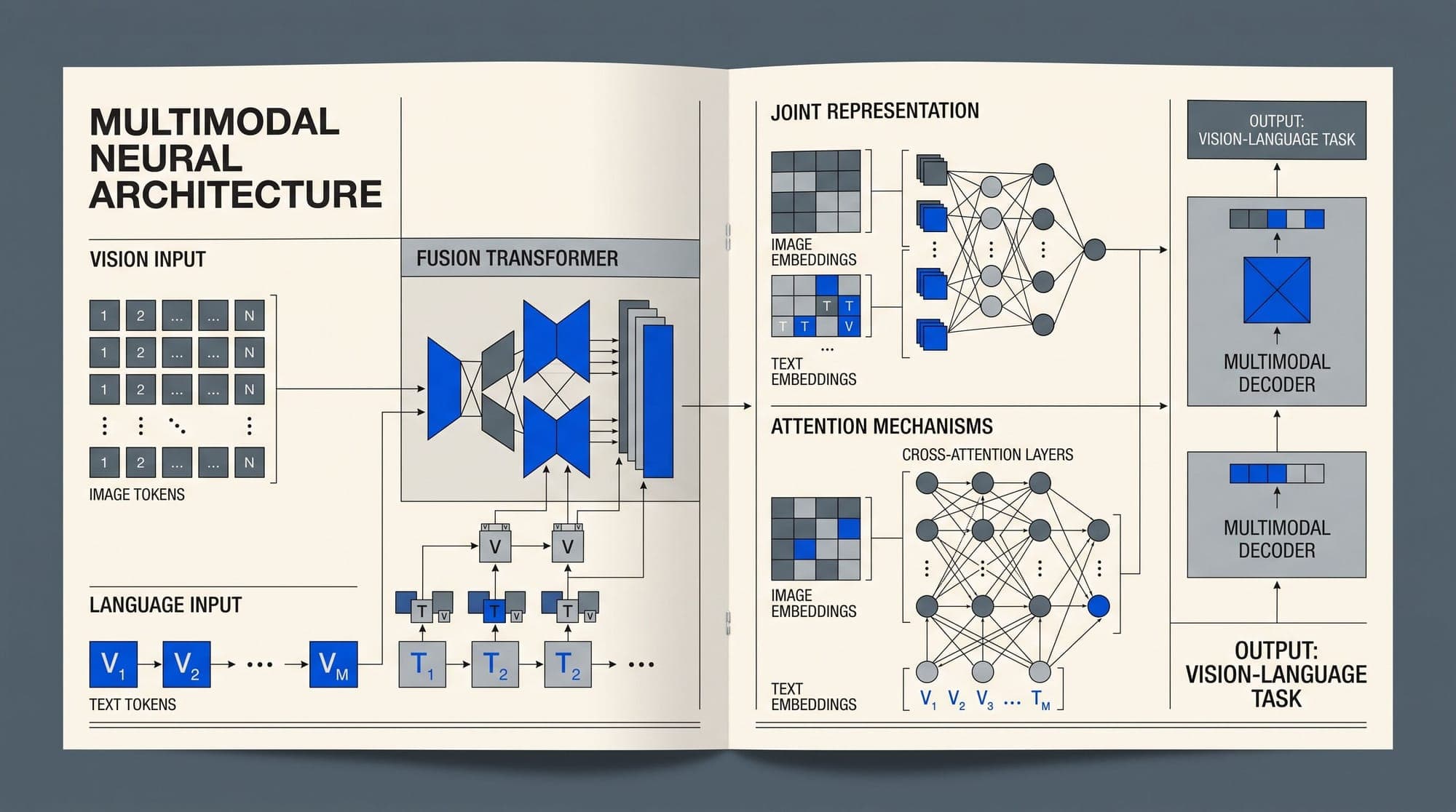
DeepSeek has expanded its flagship lightweight model with the release of DeepSeek-V4-Flash-Vision-Exp, an experimental multimodal variant that adds visual comprehension and document parsing to its API platform. The release bridges the gap between DeepSeek's high-throughput text architecture and vision-centric agent workflows.
According to DeepSeek, the experimental model retains the text reasoning, agentic tool-use capabilities, and world knowledge of the base DeepSeek-V4-Flash checkpoint while adding the ability to ingest and process visual inputs such as application interfaces, technical charts, diagrams, and scanned documents.
Fixed-Budget Visual Tokenization
A key architectural constraint in DeepSeek-V4-Flash-Vision-Exp is its deterministic image tokenization scheme. Rather than expanding sequence budgets dynamically into thousands of patch tokens, DeepSeek caps the tokenization of each submitted image to a maximum of 384 tokens.

Images are billed at the standard DeepSeek-V4-Flash token rates, ensuring predictable inference costs during high-volume multimodal evaluation. Developers can pass visual data across standard API endpoints, including Chat Completions, Messages, and Responses.
The API supports three distinct ingestion formats for visual inputs:
- Base64 Encoding: Inline image data payloads passed directly within request bodies.
- External URLs: Public image links fetched asynchronously during the inference prefill stage.
- Dedicated Files API: A newly launched free file management endpoint that allows users to upload images once and reference them across multiple subsequent inference calls via a persistent
file_id.
The Files API is designed to reduce client-side bandwidth overhead and payload serialization latency when executing iterative agentic loops over static screenshots or complex visual documents.
Multimodal Benchmark Results and Agentic Tooling
Alongside the API release, DeepSeek published early benchmark metrics highlighting the performance gains achieved when coupling vision features with code and agent reasoning. On the DeepSWE software engineering benchmark, the experimental vision model reached a score of 59.3, representing a 4-point improvement over the text-only 0731 checkpoint. The boost is attributed to the model's ability to inspect rendered front-end components, error screenshots, and visual architecture diagrams during automated development tasks.
On broader multimodal agent benchmarks, DeepSeek noted that the model's performance approaches Anthropic's Claude Opus 4.8 while running on a significantly lower latency and cost profile.
Out-of-the-box support for the new model has been integrated into DeepSeek Harness version 0.1.1, enabling developers to incorporate deepseek-v4-flash-vision-exp directly into existing agent orchestration pipelines.



