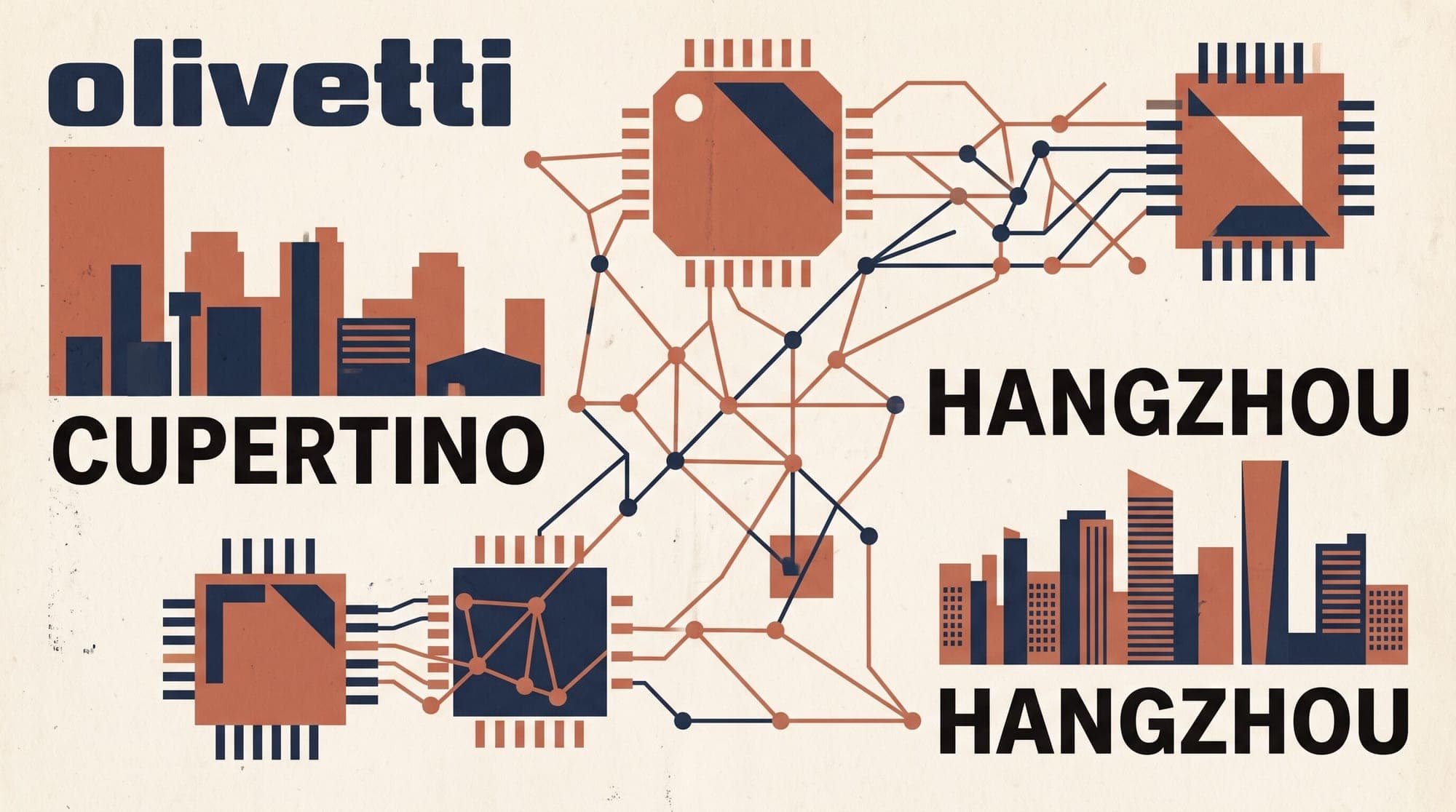
Apple has developed and trained a proprietary large language model tailored specifically for mainland China with infrastructure and technical assistance from Alibaba Group, according to reporting from Reuters. The move marks a shift in Apple's deployment strategy for Apple Intelligence in its most competitive international market, where Western foundation models remain blocked by domestic regulators.
The Cyberspace Administration of China (CAC) registered Apple's generative AI service in July 2026, clearing the regulatory approvals required to offer generative models to Chinese consumers. The registration positions Apple as the first foreign company cleared by Beijing to operate a proprietary foundation AI model within the country.

The Dual-Track Deployment Architecture
In Western markets, Apple Intelligence relies on a combination of proprietary on-device small models, Private Cloud Compute servers running Apple silicon, and an external integration layer routing complex general-knowledge queries to third-party providers such as OpenAI.
In China, regulatory constraints and internet filtering preclude access to OpenAI, Google, and Anthropic. Apple initially explored relying entirely on domestic third-party models, engaging in technical discussions with Baidu and Alibaba.
Instead of outsourcing the entire intelligence layer, Apple implemented a hybrid dual-track structure:
- Proprietary Core Model: Apple trained its own China-specific foundation model to power native system-level tasks, on-device contextual synthesis, and core OS interactions across iOS, iPadOS, macOS, and visionOS.
- Alibaba Technical and Infrastructure Support: Alibaba provided training compute infrastructure and localized technical assistance to ensure compliance with Chinese data curation and algorithmic governance mandates.
- Domestic Partner Integration: Alibaba's Qwen foundation models and search/retrieval technology from Baidu will handle external world-knowledge queries and specialized cloud tasks.
Navigating Chinese AI Governance
China enforces strict pre-deployment evaluation and registration procedures for all public-facing generative AI systems under interim administrative measures established by the CAC. Foundation models must undergo algorithm filing, security assessments, and evaluation against state content standards before public distribution.
By training its own localized model rather than relying solely on API wrappers around third-party engines, Apple retains control over UI integration, latency budgets, and privacy telemetry on Chinese-market devices. The custom weights ensure that base system features operate within local regulatory boundaries while maintaining standard interface parity with global Apple Intelligence deployments.
The localized Apple Intelligence suite is scheduled to roll out to compatible iPhone, iPad, Mac, and Vision Pro devices in China in upcoming operating system updates.