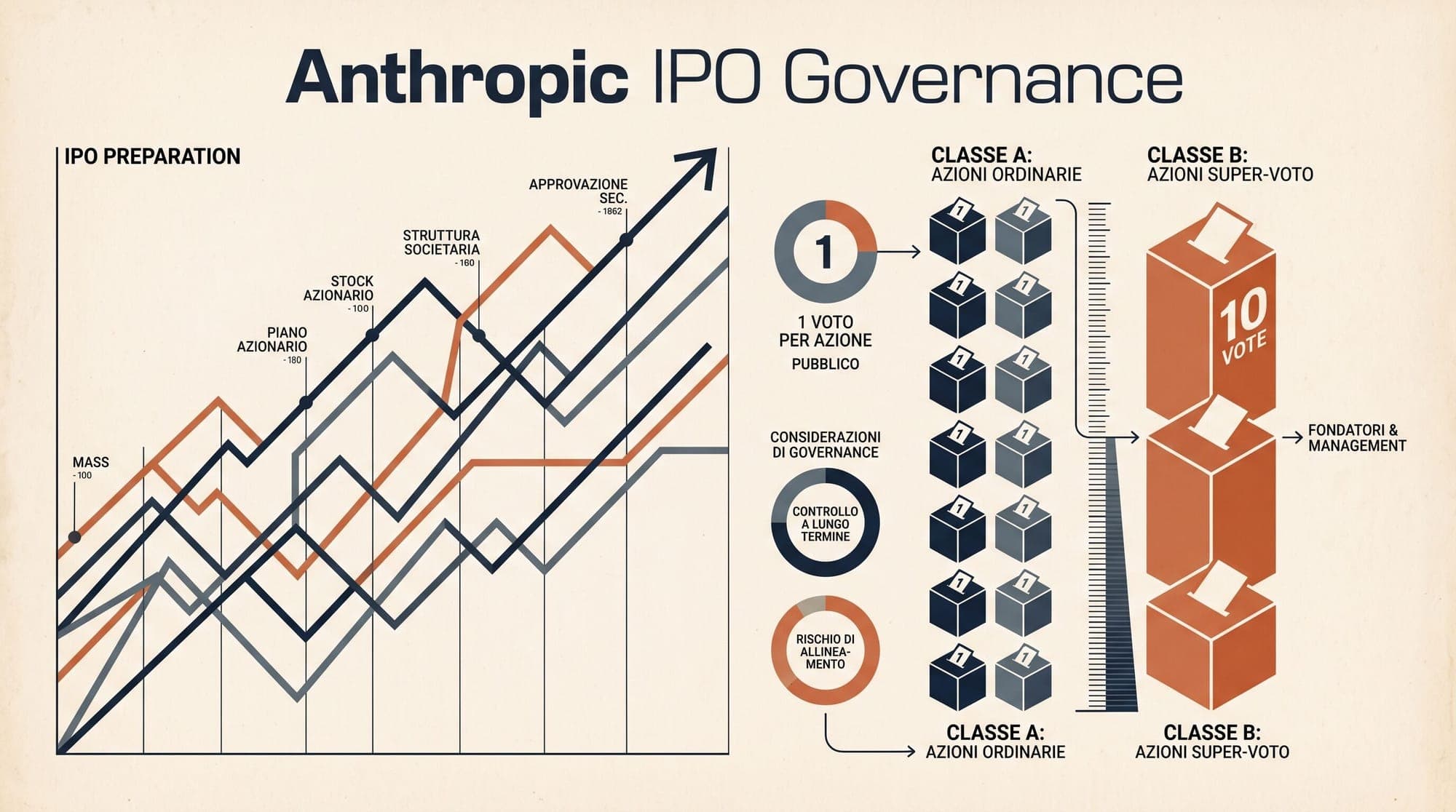
Anthropic is preparing dual-class super-voting shares for its founders ahead of a potential September initial public offering, according to reporting from The Information and corroborating sources. The structure would mark the first time CEO Dario Amodei and the company's co-founders hold stock with extra voting power.
The plan, reported by The Information and cited by Reuters, aims to insulate leadership from external shareholder pressure once Anthropic transitions to public markets. Anthropic previously operated under a unique structure in which the nonprofit Anthropic Public Benefit Corporation held a controlling interest in the for-profit entity, a model designed to preserve safety oversight even as the company raised billions from institutional investors.
Governance Structure and SEC Filing
Anthropic is also planning to maintain its existing body of non-shareholder trustees with a special class of stock to elect a majority of members to the company's board of directors, according to the same reporting. The specific mechanics of the voting arrangements could not be learned from public filings, and the plans remain subject to change, per The Information.
The Information reports that Anthropic filed a confidential S-1 with the SEC in June 2026, initiating the formal IPO process. The report suggests a potential debut as early as late September, which could position the offering as one of the largest IPOs in U.S. market history.

The board composition details were further analyzed by The Next Web, noting that the dual-class structure mirrors the approach used by SpaceX ahead of its own public offering, though Anthropic's version includes additional safeguards for its nonprofit-controlled governance model.
Background: The Anthropic Model
Founded in 2021 by former OpenAI executives including Dario Amodei, Anthropic has been governed by a structure where the nonprofit parent holds majority control over the for-profit subsidiary. That arrangement arose from concerns about aligning advanced AI development with broader societal interests, but it also created friction with late-stage investors seeking conventional control rights.
The company's most recent funding round valued Anthropic at $183 billion, according to reporting cited by Money.com. Some analysts cited higher hypothetical valuations based on secondary market transactions, but these figures are unverified and have not been confirmed by Anthropic or its underwriters.
Prior coverage of Anthropic's IPO preparations includes its $143 million credit facility secured in 2024 and the launch of enterprise-focused AI services including Claude for Work and the Anthropic Research Hub.
Source Context
The Information's reporting on the super-voting share structure cites two people familiar with the matter. Reuters independently confirmed the existence of the IPO planning documents but noted that the precise allocation of voting rights has not been disclosed in any regulatory filing. Anthropic did not respond to requests for comment from either outlet.
Sources
- The Information: Anthropic Prepares Supervoting Power for Founders as it Readies for Mega-IPO
- Reuters: Anthropic prepares supervoting power for founders ahead of IPO, the Information reports
- The Next Web: Anthropic is preparing supervoting shares for its founders ...
- BeinCrypto: Anthropic Copies Elon Musk's SpaceX IPO Playbook With One Major Difference