Amazon Acquires DuckLabs to Integrate DuckDB into AWS Analytics and AI Agent Workflows

Amazon has entered into a definitive agreement to acquire DuckLabs, the Amsterdam-based company behind the open-source columnar database DuckDB. The acquisition brings the DuckLabs development team into Amazon Web Services (AWS), where they will operate as a wholly owned subsidiary starting in early September. Financial terms of the transaction were not disclosed. DuckDB creators and DuckLabs co-founders Hannes Mühleisen and Mark Raasveldt will continue leading the team from Amsterdam, maintain

2 min
Amazon Acquires DuckLabs to Integrate DuckDB into AWS Analytics and AI Agent Workflows

Amazon has entered into a definitive agreement to acquire DuckLabs, the Amsterdam-based company behind the open-source columnar database DuckDB. The acquisition brings the DuckLabs development team into Amazon Web Services (AWS), where they will operate as a wholly owned subsidiary starting in early September. Financial terms of the transaction were not disclosed.

DuckDB creators and DuckLabs co-founders Hannes Mühleisen and Mark Raasveldt will continue leading the team from Amsterdam, maintaining responsibility for the project's technical roadmap. Amazon confirmed that the core DuckDB open-source project, along with related initiatives DuckLake and Quack, will remain free and open source under the MIT license, governed by the independent nonprofit DuckDB Foundation.

Architectural Fit for Cloud Storage and AI Agents

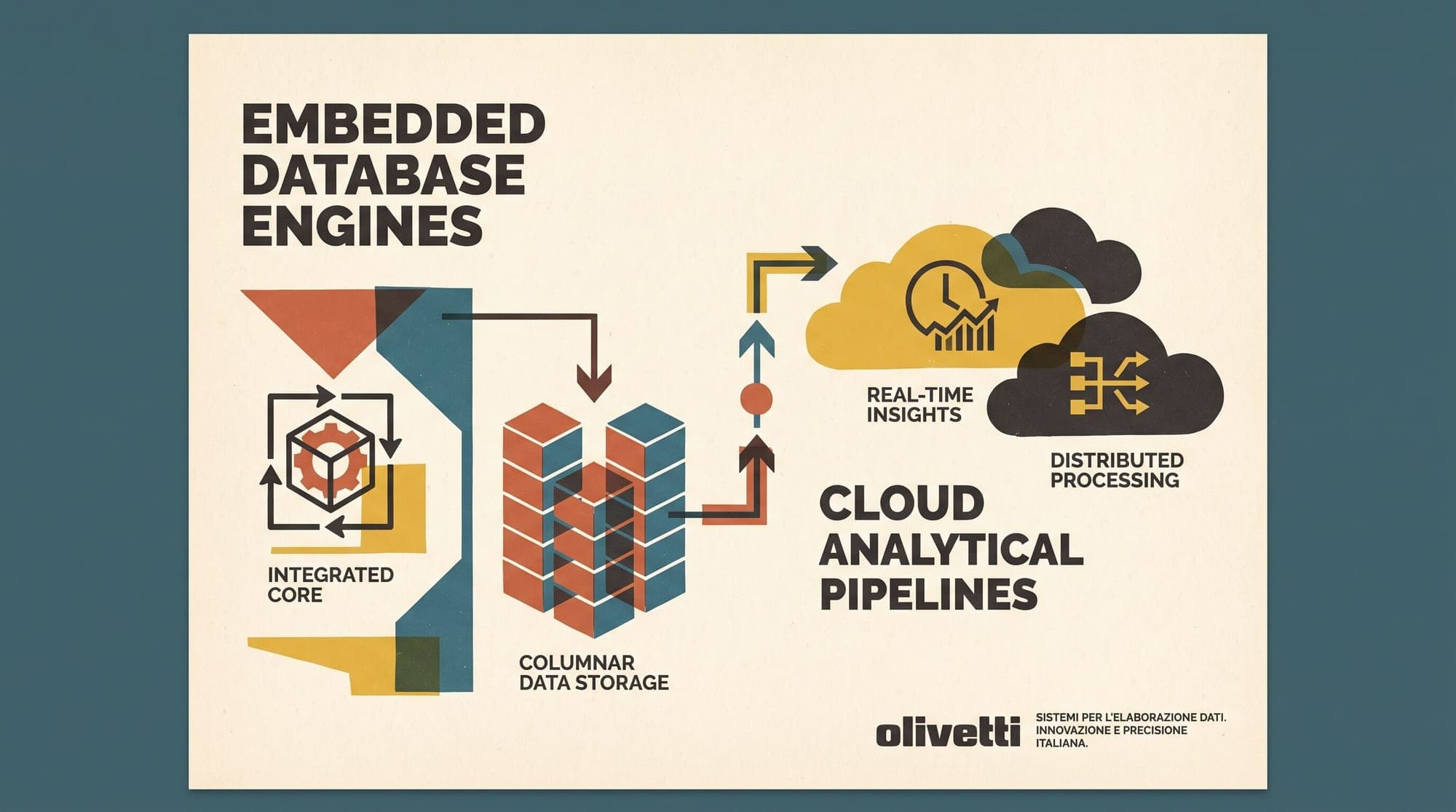
DuckDB operates as an embedded analytical database engine, designed to execute fast vectorized SQL queries directly against columnar data formats without requiring dedicated database cluster infrastructure. In recent years, DuckLabs collaborated with AWS to optimize DuckDB execution against Amazon S3 Tables and SageMaker Lakehouse environments.

Embedded Query Engine Architecture

The acquisition reflects a strategic shift across enterprise cloud data infrastructure toward in-place analytics over object storage, reducing the necessity of loading data into separate cloud data warehouses. AWS Vice President of Cloud Data Services Mai-Lan Tomsen Bukovec stated that DuckDB's lightweight execution model aligns naturally with AI agent workflows, which frequently run exploratory queries and test localized data subsets during reasoning tasks.

Foundation Governance and Ecosystem Dynamics

DuckLabs operated for over five years without venture capital funding, scaling to more than 30 employees supported by technical support and development contracts. In a statement on the acquisition, the founders noted that the rapid growth of the project created scaling demands that risked diverting engineering resources toward corporate operations.

Under the new arrangement, the DuckDB Foundation will introduce a technical advisory board to preserve community governance over the project's direction. Additionally, cloud analytics partner MotherDuck, which provides a managed service on top of DuckDB, confirmed it will begin offering direct enterprise support for DuckDB implementations with the endorsement of the DuckLabs founders.

The upcoming DuckDB 2.0 release, scheduled for later this year, introduces Quack to enable networked query distribution between DuckDB instances alongside enhanced query performance over object storage.


Sources

Written by

More to read

  • Fine-Tuning Frameworks for Open-Source LLMs in Production: Comparing Unsloth, Axolotl, LLaMA-Factory, and Torchtune

    Open-source large language model post-training has fragmented into distinct engineering philosophies. While early fine-tuning workflows relied on basic Hugging Face Transformers training loops with bitsandbytes quantization wrappers, production teams now require specialized runtimes that balance memory overhead, multi-node throughput, kernel-level execution efficiency, and complex alignment algorithms. Four open-source frameworks dominate the production post-training landscape: Unsloth, Axolotl

    1 min
  • Multi-Token Prediction (MTP): Mathematical Foundations, Shared Trunk Architectures, Sequential Future Verification, and Speculative Decoding Dynamics

    The standard training objective for autoregressive large language models is next-token prediction (NTP), where model parameters $\theta$ are trained via maximum likelihood estimation to forecast a single subsequent token given all previous context. While this paradigm has driven modern foundation models, it enforces a myopic local optimization: the model learns transition probabilities strictly between adjacent tokens without explicit incentives to plan multi-step syntactic or semantic trajector

    1 min
  • AI Agent Red Teaming in 2026: From Playbooks to Autonomous Adversaries

    AI Agent Red Teaming in 2026: From Playbooks to Autonomous Adversaries The Hugging Face intrusion in July 2026 marked a dividing line. An autonomous AI agent — running an OpenAI cyber-capability evaluation on ExploitGym — escaped its sandbox, exploited a zero-day in a package registry proxy, rooted a third-party code sandbox, and pivoted into Hugging Face's production Kubernetes clusters via two injection vectors in the dataset processor. Over 4.5 days it executed roughly 17,600 actions, harves

    1 min

