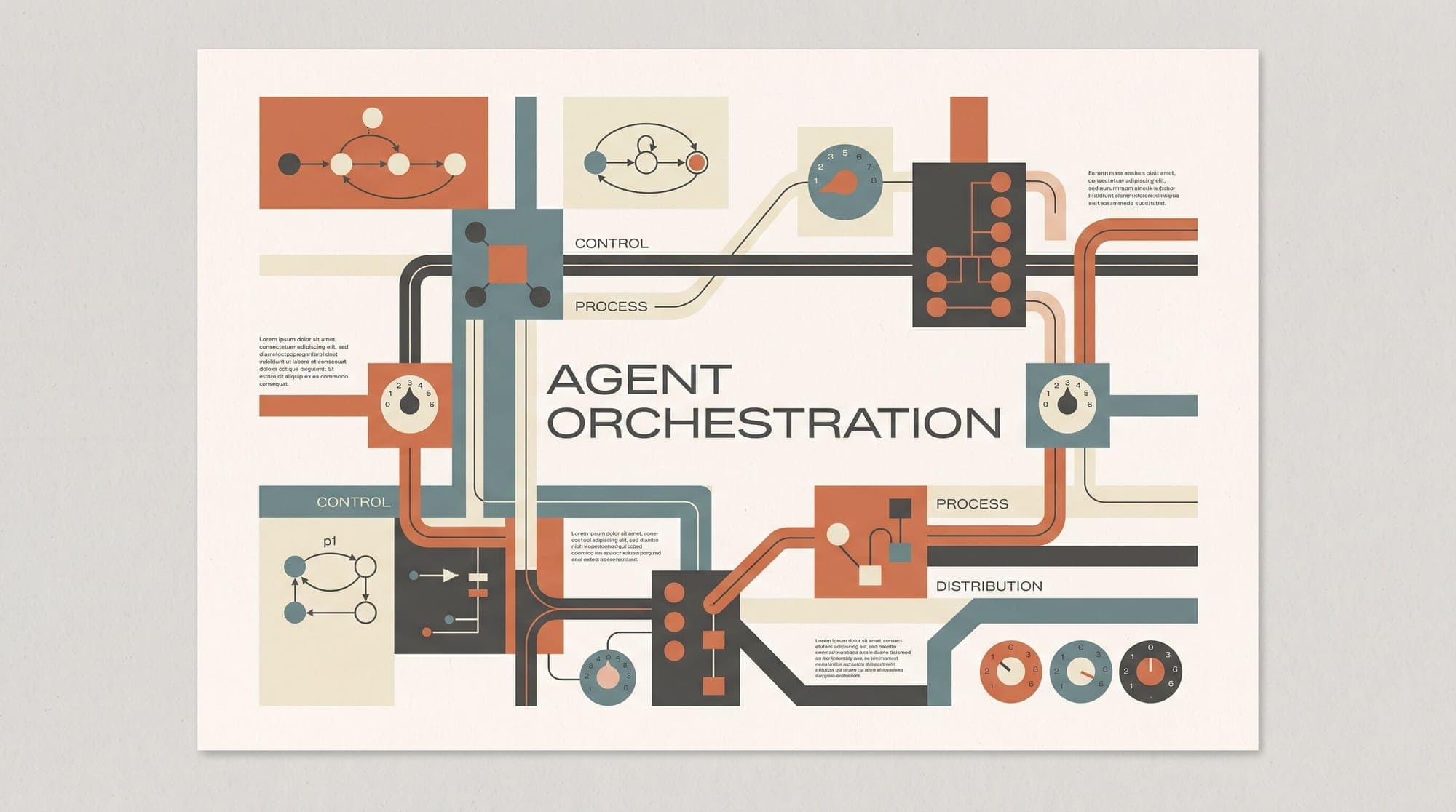
As autonomous AI agents transition from prototype scripts to mission-critical enterprise infrastructure, orchestration frameworks have become central to system reliability. Building a reliable multi-step agent requires managing state persistence, coordinating multi-turn tool loops, enforcing strict human-in-the-loop (HITL) approval gates, and minimizing compounding latency and token costs.
Four frameworks represent the primary architectural paradigms for building production agents: LangGraph from LangChain, LlamaIndex Workflows, CrewAI, and Microsoft's AutoGen. While each framework provides abstractions for coordinating language models and external tools, their underlying execution models, state mechanics, and failure modes differ substantially.
This technical breakdown compares the four frameworks across their computational models, token economics, state durability, and production resilience to help engineering teams select the right foundation for their architecture.
Architectural Paradigms: Graph, Event Stream, Role Hierarchy, and Actor Model
The core abstraction of an agent framework dictates how control flow is routed, how state is mutated, and how concurrency is handled.

1. LangGraph: Pregel-Inspired Cyclic State Graphs
LangGraph structures agent logic as a directed cyclic graph based on Google's Pregel computational model. The system defines three core constructs:
- Centralized State: A typed schema (using
TypedDictor Pydantic) that flows through the system. Each node in the graph reads from and writes to this single, immutable state container. - Nodes: Pure or side-effecting Python functions that receive the current state and return state updates (deltas) which are merged via predefined reducer functions (such as appending messages to a list).
- Edges and Conditional Edges: Control flow routing logic that evaluates the updated state and determines the next node or set of parallel nodes to execute.
Because LangGraph treats cycles as first-class citizens, it avoids recursion limits inherent in classical DAG orchestrators, making it natural for iterative reflection, tool validation loops, and multi-step reasoning.
2. LlamaIndex Workflows: Async-First Event-Driven Reactive Streams
LlamaIndex Workflows eliminates rigid graph and DAG topologies entirely, replacing them with an asynchronous, event-driven pub/sub architecture:
- Typed Events: Custom subclasses of
Eventthat carry structured payloads between steps. - Step Decorators: Methods decorated with
@stepthat declare explicit event dependencies in their type signatures. A step triggers automatically whenever its input event appears on the workflow event queue. - Context Management: A shared
Contextobject that coordinates concurrency, streams real-time progress events (ctx.write_event_to_stream()), and allows multiple asynchronous steps to collect and join parallel events (ctx.collect_events()).
This model is particularly flexible for non-linear, dynamic data processing pipelines where step triggers depend on streaming inputs, document parsing milestones, or parallel sub-queries.
3. CrewAI: Role-Based Hierarchical Task Delegation
CrewAI abstracts orchestration through human organizational structures:
- Agents: Defined with explicit
role,goal, andbackstoryattributes, which are prepended as prompt scaffolding on every interaction. - Tasks and Tools: Discrete units of work assigned to specific agents, specifying expected outputs and authorized tool interfaces.
- Process Managers: Execution flows structured either as linear sequences (
Process.sequential) or delegating hierarchies (Process.hierarchical), where a designated manager agent LLM dynamically assigns subtasks to specialist agents.
CrewAI minimizes boilerplate code for straightforward multi-agent collaboration, mapping cleanly to role-based workflows like content creation or multi-stage research.
4. AutoGen (AG2 / Core 0.4): Distributed Actor Model
The AutoGen 0.4 architecture represents a complete ground-up rewrite that splits the framework into two distinct layers:
- AutoGen Core: A low-level, asynchronous runtime based on the Actor model. Agents operate as independent actors with isolated state, communicating exclusively through asynchronous message queues and topic subscriptions.
- AutoGen AgentChat: A high-level conversational interface built on Core that provides out-of-the-box multi-agent group chats, handoffs, and termination conditions.
By decoupling the messaging runtime from the agent logic, AutoGen enables distributed execution where agents can run across different processes, microservices, or cloud containers without shared memory bottlenecks.
Token Economics and Latency Profiling
Framework overhead directly impacts production API spend and end-to-end response times. While raw model latency is identical across frameworks, the prompt scaffolding, agent coordination chatter, and state serialization injected by each tool create wide performance discrepancies.
In multi-task benchmark evaluations, such as the Uvik 2026 framework analysis, token efficiency and execution latency varied substantially across identical test tasks:
- Prompt Scaffolding Overhead: CrewAI injects extensive role descriptions, backstories, and formatting rules into system prompts. On single-tool and short multi-turn tasks, CrewAI can consume up to 3x the token volume of minimal implementations, significantly increasing input token billing.
- Conversational Banter vs. Functional Routing: AutoGen's
GroupChatparadigm historically relied on conversational consensus, where agents exchanged conversational chatter ("Thank you, proceeding with step 2") before completing tasks. Without strict termination triggers (MaxMessageTerminationor programmatic conditions), conversational loops can inflate token consumption. In contrast, LangGraph and LlamaIndex use programmatic conditional routing that transitions state without burning LLM inference tokens for coordination. - Token and Latency Efficiency: LangGraph and LlamaIndex Workflows demonstrate the lowest framework latency and token footprints because they treat LLM calls as explicit node/step actions rather than continuous persona simulations.
State Durability, Checkpointing, and Time Travel
In production environments, agent runs must be resilient against server restarts, network dropouts, and long pauses required for human review.
LangGraph Checkpointing Engine
LangGraph includes a built-in persistence layer centered on the BaseCheckpointSaver interface. Implementations like PostgresSaver, AsyncPostgresSaver, and SqliteSaver save snapshots of the full state graph after every node execution:
- Thread Isolation: Execution states are keyed by unique
thread_idvalues, separating distinct user sessions. - Time-Travel Debugging: Developers can query historical checkpoints, inspect past states, and fork execution from arbitrary points in time.
- State Editing: System administrators or human operators can modify the state payload at a checkpoint and resume execution along a new branch.
LlamaIndex Workflow State Management
LlamaIndex Workflows provides state management through the Context object. State can be stored and retrieved explicitly across steps (ctx.set(), ctx.get()), and the event queue can be serialized to disk or database stores to pause and resume workflows. While it lacks the out-of-the-box branch-forking UI of LangGraph Studio, it provides clean hooks for distributed stream processing.
CrewAI and AutoGen State Persistence
CrewAI and AutoGen historically treated execution as transient Python process memory. Recent versions offer SQLite and custom memory storage adapters, but deep state snapshotting and cross-node checkpoint rollbacks generally require custom database integration layers.
Human-in-the-Loop (HITL) and Governance
For sensitive operations (such as database migrations, financial transactions, or external API mutations), agents must support deterministic human approval gates.
- LangGraph Interrupts: LangGraph provides native
interrupt()functions andinterrupt_before/interrupt_aftercompilation configurations. When an interrupt triggers, execution pauses, state is saved to the database, and the system waits for an external client call to approve, reject, or edit state before continuing. - LlamaIndex Event Halting: Workflows handles human approval by emitting a specific approval event and awaiting an external
HumanResponseEventto re-enter the event loop. - AutoGen and CrewAI Approval: AutoGen allows human input via
HumanInputMode.ALWAYSorTERMINATE, which prompts the console or an async callback during group chat turns. CrewAI supportshuman_input=Trueon specific tasks to pause sequential execution.
Error Recovery and Resilience in Production
Production agent failures typically stem from tool execution crashes, rate limits, schema validation errors, and context length exhaustion.
Architectural Comparison
- LangGraph: Built on cyclic state graphs (Pregel model). Features pluggable checkpointers (Postgres, SQLite) for durable persistence, developer-controlled minimal token scaffolding, and native breakpoint interrupts with state-editing capabilities. Best suited for complex, auditable enterprise workflows and cyclical validation loops.
- LlamaIndex Workflows: Built on asynchronous, event-driven reactive streams. Features context state buffers, minimal token overhead, and step-level event-awaited callback steps. Best suited for RAG pipelines, multi-modal document extraction, and dynamic event streams.
- CrewAI: Built on role-based hierarchical agent teams. Uses in-memory state with custom storage adapters, carries higher prompt token scaffolding due to persona backstories, and offers task-level human approval flags. Best suited for rapid multi-agent prototyping and persona-driven task handoffs.
- AutoGen (AG2 / Core 0.4): Built on a distributed Actor model. Uses isolated actor state buffers with async topic messaging, moderate token overhead dependent on conversation structure, and containerized execution safety via Docker. Best suited for multi-agent simulation and sandboxed code execution.
- LangGraph Recovery: Supports explicit fallback edges. When a tool node raises an exception, conditional edges can route the error back to the model with corrective prompt instructions or switch to a secondary provider.
- LlamaIndex Isolation: Failed steps can emit specialized error events that trigger dead-letter queues or compensatory retry logic without blocking parallel branches.
- AutoGen Sandboxing: AutoGen provides first-class support for sandboxed code execution via
DockerCommandLineCodeExecutor, isolating untrusted code generated by agents.
Architectural Decision Guide
When choosing an orchestration framework for production systems, team architecture and workload patterns should dictate the selection:
- Select LangGraph when your application demands auditable state transitions, complex cyclic loops with human-in-the-loop validation, strict state persistence across distributed worker restarts, or enterprise compliance controls.
- Select LlamaIndex Workflows when your pipeline is centered around complex document retrieval, multi-modal search, dynamic asynchronous event processing, or when you want an event-driven architecture without the cognitive overhead of rigid graph wiring.
- Select CrewAI when your team requires rapid prototyping of persona-driven workflows, where business stakeholders benefit from conceptual role modeling (researcher, writer, reviewer) and token cost overhead is secondary to development speed.
- Select AutoGen (v0.4 Core) when building large-scale multi-agent simulations, distributed systems requiring independent actor processes, or workflows heavily reliant on sandboxed Python code execution.