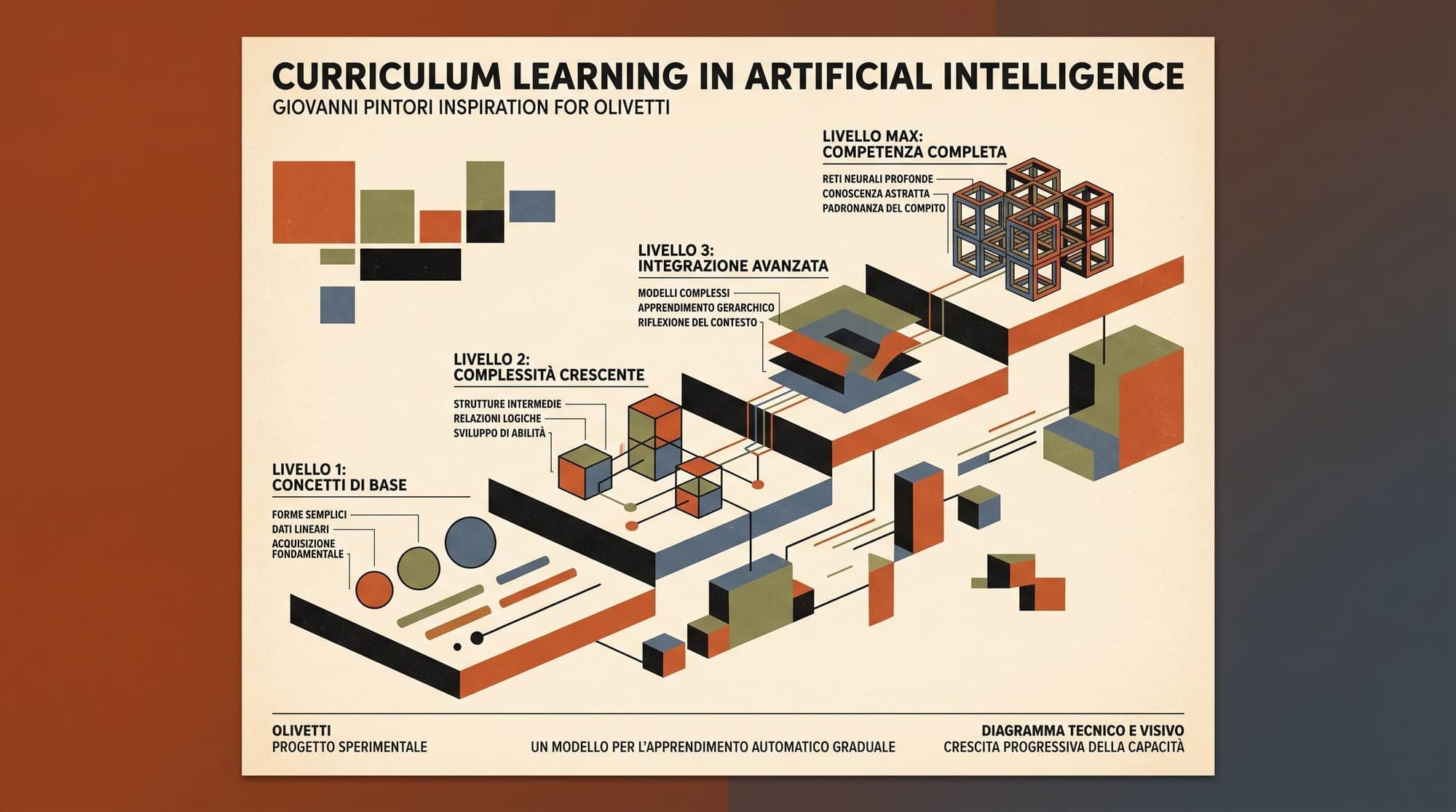
Curriculum Learning in Large Language Models: How Difficulty Pacing, Competence Progression, and Task Scheduling Shape Training Dynamics
In standard large language model pre-training and fine-tuning pipelines, training batches are almost universally sampled uniformly and independently at random from a static corpus: $$\mathcal{D} = \{z_i = (x_i, y_i)\}_{i=1}^N$$ While this independent and identically distributed (i.i.d.) sampling paradigm aligns with empirical risk minimization (ERM), it ignores the non-convex geometry of deep transformer loss surfaces. Early in training, when network parameters are randomly initialized or unal
1 min