
In a broadcast interview on Sunday, President Donald Trump defended the rapid expansion of artificial intelligence data centers across the United States, characterizing municipal and community opposition to new facilities as a significant economic mistake.
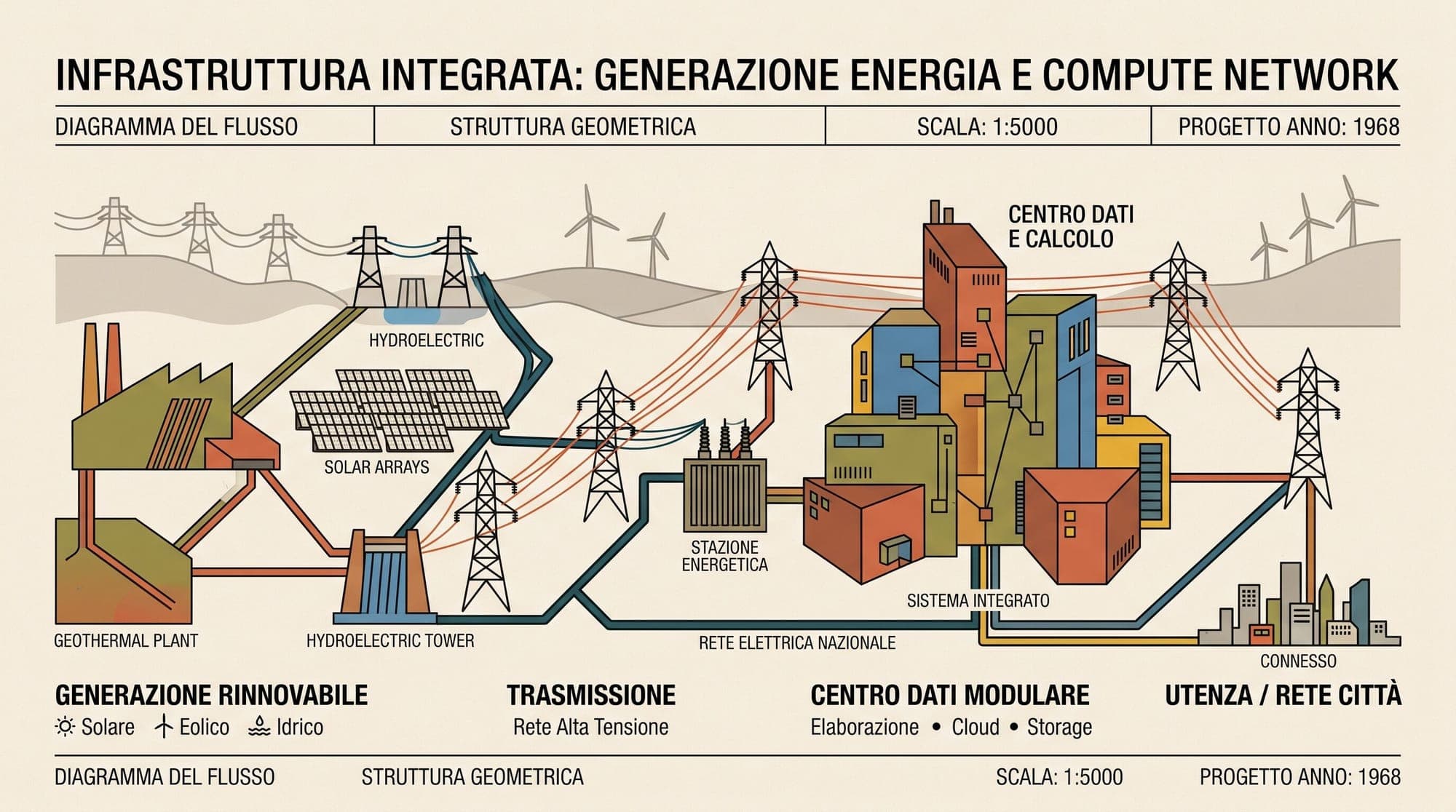
Speaking on 77 WABC with Michael Cohen, Trump argued that high-density computing infrastructure provides essential local tax revenue, construction employment, and high-tech economic activity. Addressing concerns regarding regional electricity consumption, Trump asserted that the United States maintains a substantial lead over China in artificial intelligence infrastructure, emphasizing that newer hyperscale facilities increasingly invest in dedicated, on-site energy generation to avoid depleting local utility grids.

State-Level Policy Divergence
Trump's remarks highlight a growing policy split between federal initiatives encouraging rapid compute deployment and state-level regulatory pushback.
Across several key states, local officials have enacted measures to protect ratepayer capacity:
- Texas: Governor Greg Abbott recently signaled that data center operators have faced justified local resistance after failing to secure community alignment prior to development, mandating that facilities cover their full electrical infrastructure upgrade costs.
- Pennsylvania: Governor Josh Shapiro signed Executive Order 2026-05, establishing stricter oversight and restrictions on speculative interconnection requests from data center operators.
- New York: Governor Kathy Hochul enacted a one-year moratorium on new hyperscale data center construction to assess environmental and electrical grid strain.
Federal Permitting and Behind-the-Meter Generation
The administration has sought to accelerate infrastructure rollouts through administrative reforms while mitigating public grid impacts. Recent guidance issued by the Environmental Protection Agency clarified that dedicated power generation systems operating independently of the public grid fall outside the Clean Air Act's Acid Rain Program permitting framework.
Concurrently, federal policy has promoted the Ratepayer Protection Pledge, encouraging hyperscalers to procure or construct dedicated behind-the-meter generation. While off-grid installations reduce strain on municipal distribution systems, the rapid pace of utility interconnection queues continues to serve as a primary bottleneck for domestic compute capacity.



