
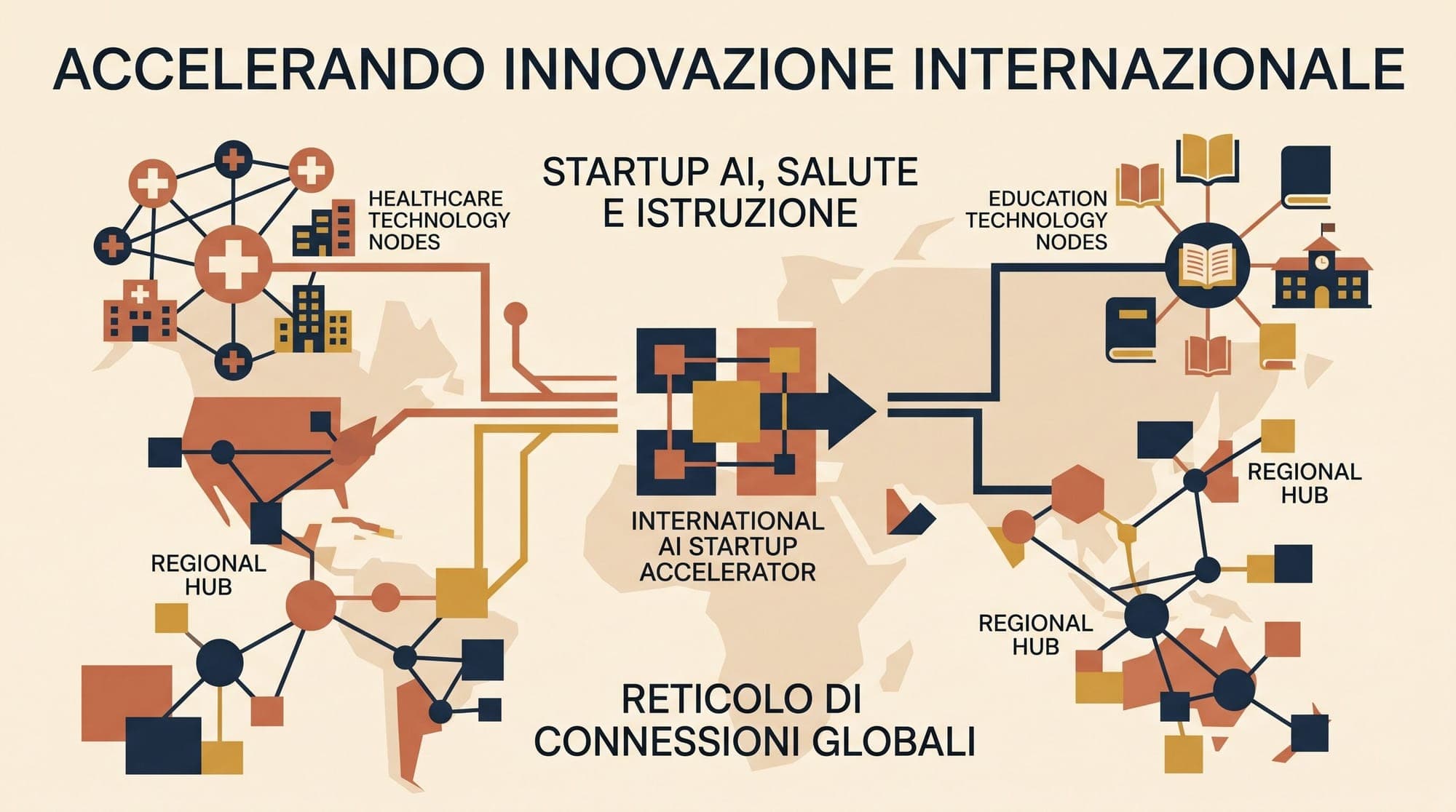
OpenAI has partnered with Thailand's Ministry of Higher Education, Science, Research and Innovation (MHESI) to launch an eight-week accelerator program supporting ten Thai startups building AI products in healthcare, wellness, and education.
The initiative, announced in Bangkok, represents OpenAI's first public-private partnership focused on startup acceleration with the Thai government. Participating organizations include Thailand's National Innovation Agency (NIA), Mahidol University, and Techsauce.

Regional AI Adoption and Developer Growth
According to internal usage metrics disclosed by OpenAI, Thailand has emerged as an active market for developer and consumer AI adoption:
- Thailand ranks among the top 20 countries globally for weekly active users of ChatGPT.
- Weekly active usage of OpenAI Codex in Thailand expanded by more than 350-fold since the beginning of 2026, also placing the country in the top 20 globally for Codex activity.
The accelerator program targets the gap between software prototypes and production deployment, emphasizing validation, safety boundaries, and localized technical integration.
The Inaugural Startup Cohort
The accelerator selected ten startups divided evenly between healthcare/wellness and education technology:
Healthcare and Wellness
- CARIVA: Developing multilingual voice agents for hospital switchboards capable of handling patient intake, appointment scheduling, and recognizing medical emergency triggers for clinical escalation.
- Wello Food: Building nutrition and dietary planning systems powered by contextual language models.
- Dietz: Providing clinical telehealth workflow automation and chronic illness management tools.
- Precisionize: Delivering personalized medical data analysis pipelines.
- FitSloth: Offering AI-guided wellness and physical therapy companion applications.
Education and Training
- Curico: Developing interactive learning and storytelling tools for children and families, with scheduled pilot deployments across Bangkok Metropolitan Administration childcare facilities.
- insKru: Creating teacher support platforms for curriculum planning and classroom resource generation.
- Floaino: Automating instructional material design for regional school systems.
- EasyKids Robotics: Integrating conversational interfaces into hands-on robotics and coding education kits.
- Globish: Providing automated language assessment and real-time pronunciation feedback tools.
Program Structure and Resources
During the eight-week program, participating teams receive:
- US$2,000 in OpenAI API credits per startup.
- Direct technical mentorship from OpenAI research and engineering staff.
- Access to frontier model capabilities, evaluation methodologies, and model steering frameworks.
- Academic support from Mahidol University and commercial integration pathways provided by MHESI and the National Innovation Agency.
The accelerator will culminate in a Demo Day in Bangkok in November 2026, where startups will present validation data, user metrics, and implementation roadmaps to regional investors and public health and education authorities.



