
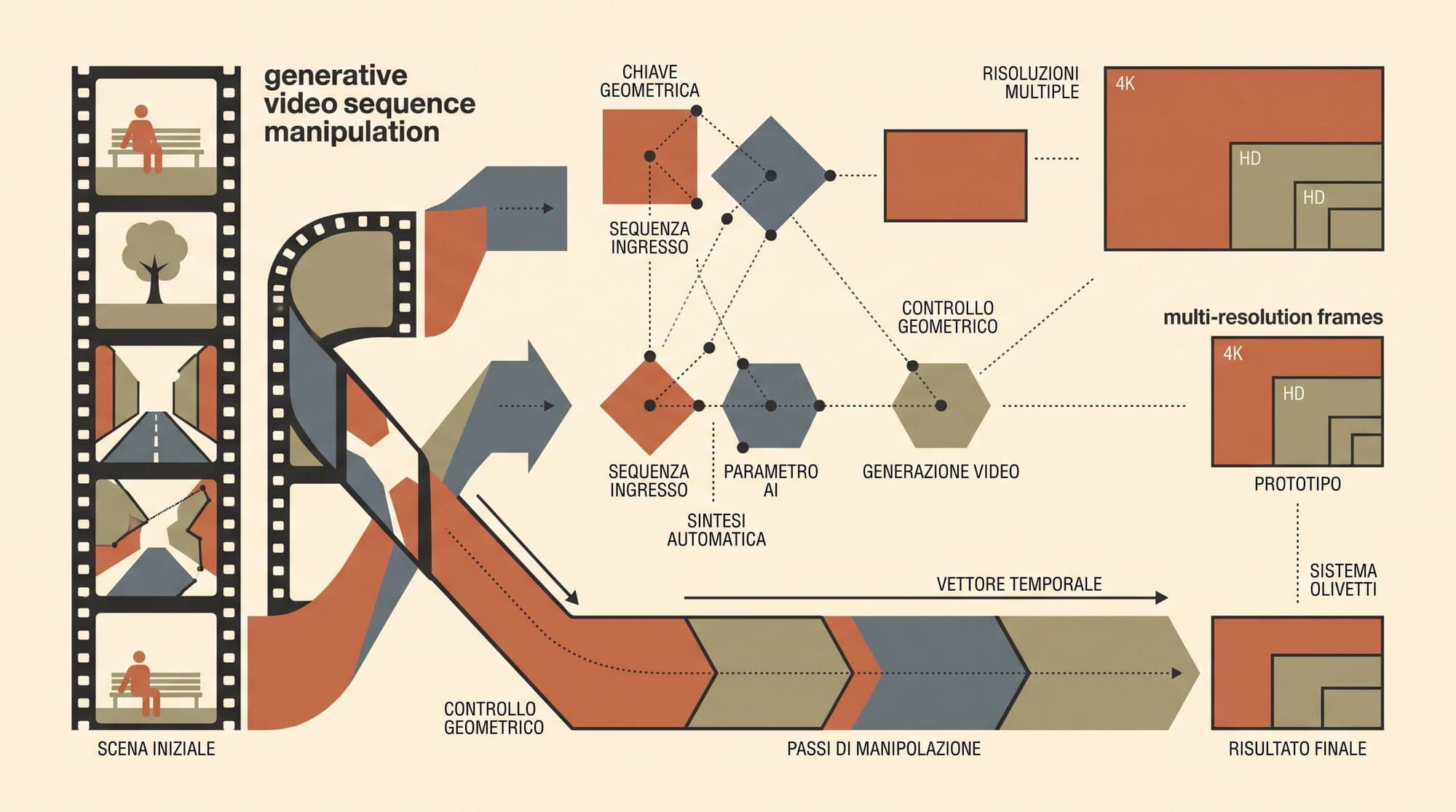
Google DeepMind has released Gemini Omni 1.1 Flash, updating its multimodal generative video model with programmatic editing controls, extended scene generation, and lower-cost drafting tiers. The model is accessible via the Gemini API in Google AI Studio and the Gemini Enterprise Agent Platform.
The update addresses primary friction points in production AI video pipelines: temporal continuity across clips, deterministic camera transitions, iterative preview costs, and high-resolution export quality.

Extended Temporal Context and Scene Stitching
Prior generative video pipelines typically evaluated only the final second of an existing video clip when generating continuations, frequently introducing drift in character appearance, scene geometry, and lighting. Omni 1.1 Flash expands this context window to evaluate up to 10 seconds of preceding video footage.
Using the expanded context, developers can extend generated footage in 10-second increments up to a cumulative video length of 40 seconds. The API maintains narrative state and visual continuity across consecutive generation calls:
from google import genai

client = genai.Client()

interaction = client.interactions.create(
    model="gemini-omni-1.1-flash",
    previous_interaction_id=previous_video_interaction.id,
    input=[
        {"type": "text", "text": "Continue the scene with a slow orbital pan."}
    ],
    response_format={
        "resolution": "720p",
    },
)
Keyframe Interpolation and Video References
To support precise directorial control without relying entirely on prompt engineering, Omni 1.1 Flash introduces two structural conditioning mechanisms:
- First and Last Frame Interpolation: Developers can supply explicit starting and ending image keyframes. The model synthesizes intermediate frames to produce unbroken transitions, orbital camera movements, or seamless looping sequences.
- Multimodal Video Conditioning: The model accepts up to 3 seconds of reference video inside prompt payloads. This allows applications to transfer motion dynamics, choreography, or specific subject behaviors onto generated targets while preserving overall scene composition.
360p Drafting Mode and 4K Upscaling
To reduce iteration latency during storyboarding and prompt refinement, Google added a dedicated 360p preview resolution. DeepMind reports that 360p rendering delivers up to 60 percent faster generation throughput at approximately one-third the compute cost of standard 720p output.
Once a composition is finalized at lower preview resolutions, developers can upscale the generated outputs to production-grade 1080p and 4K resolutions.
Developer Access and Platform Integration
Gemini Omni 1.1 Flash is available in preview via Google AI Studio and Google Cloud Vertex AI / Gemini Enterprise Agent Platform.
Third-party creative platforms have begun integrating the model into commercial workflows. Adobe is incorporating Omni 1.1 Flash into Firefly video tooling, Figma has deployed it within the Figma Weave collaborative canvas, and Runway and GMI Cloud have added the model to their inference backends.
On the consumer side, Google is rolling out scene extension and creative controls to Google AI Plus, Pro, and Ultra subscribers across Google Flow and the Gemini web interface.



