
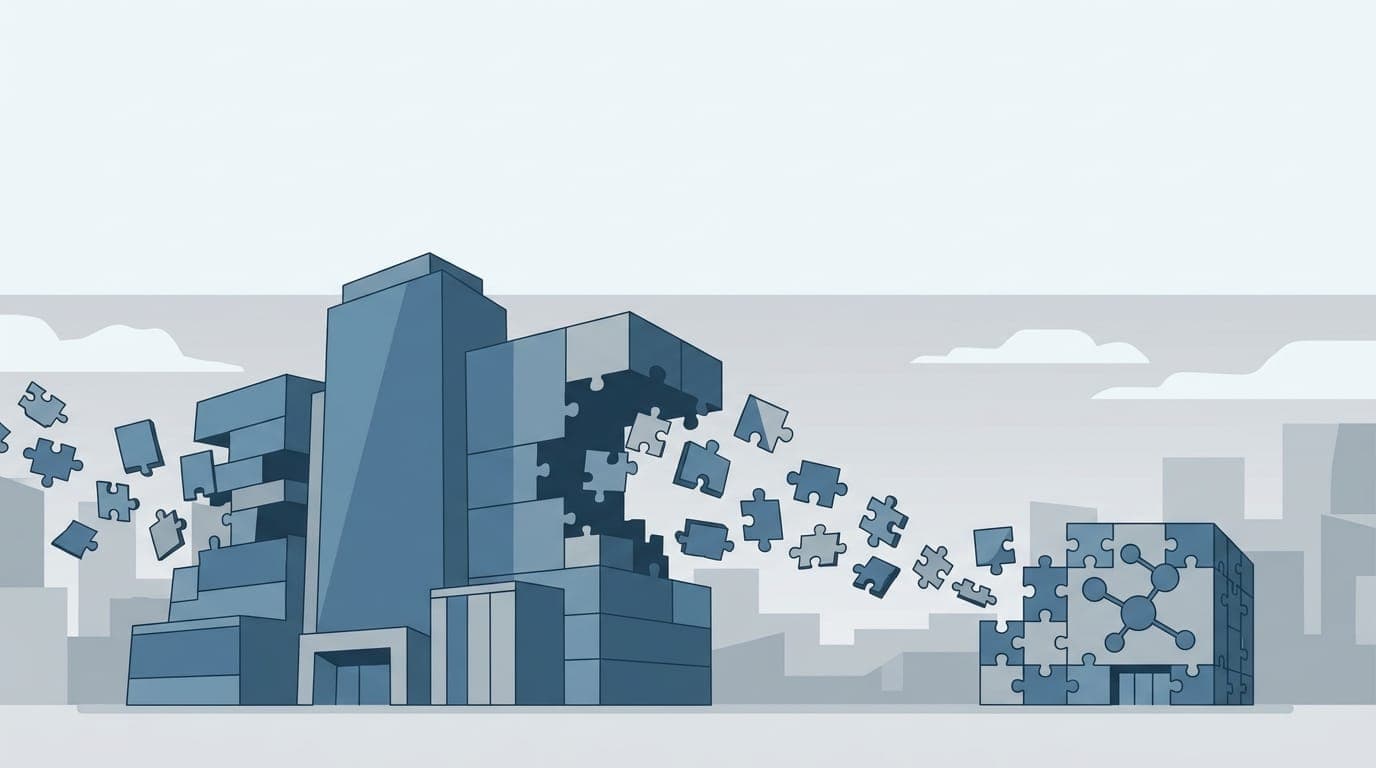
Google DeepMind is losing the independent status it held since the lab's founding, and founder Demis Hassabis may leave the company in the coming months, according to multiple reports.
A former Google manager told the Guardian that the 'era of DeepMind as an independent actor is over,' and a current DeepMind employee now describes the lab as 'just another subdivision' of Google. Day-to-day operations are shifting to AI researcher Koray Kavukcuoglu from the United States, but he is not taking the CEO title, which means DeepMind no longer has its own chief executive.
Why Hassabis is heading out

Pathfounders reported that Hassabis wanted to leave at the same time as former colleague Jeff Dean, but Google feared an even steeper stock drop than the one that already followed Dean's departure. Hassabis was instead 'promoted' to chairman to smooth the way for an orderly exit. He plans to spend more time on scientific work and the pharmaceutical startup Isomorphic Labs, and could leave DeepMind for good in the coming months.
With Hassabis sidelined, all Gemini-related development is moving to the Bay Area, and Google co-founder Sergey Brin is expected to take on more control. Brin came out of retirement during Google's first 'red alert' over ChatGPT and has been back in active development since.
Diverging interpretations
Industry analysts are split on what the restructuring means. SemiAnalysis argues the shakeup shows Google is losing the race for top frontier models, pointing to years of cautious compute allocation and a risk-averse culture. The firm compares Google to IBM retreating from PCs into mainframe consulting, or Intel protecting legacy business over bold investment.
The counterview, from Tim O'Reilly, is that Google is deliberately running a different race, building infrastructure rather than chasing model leadership. His example is Thomas Edison, who invented the light bulb but was overtaken by George Westinghouse, who built the grid that brought electricity to everyone. Google's economics now lean toward cloud and compute sales: Gemini's annualized revenue was $12 billion in the second quarter, while Google Cloud is projected to generate over $73 billion in AI infrastructure revenue and another $120 billion in TPU sales by the end of 2027.
The two readings are not mutually exclusive. Google wants both the infrastructure and a lead in AI, and the reports suggest the previous team simply did not deliver the frontier models fast enough. Gemini 3.1 Pro remains in preview, and 3.5 Pro, announced for a June release, has been effectively shelved.
Sources
Google dismantles Deepmind and bets on a fresh start as Hassabis heads for the exit (The Decoder, Aug 9, 2026): https://the-decoder.com/google-dismantles-deepmind-and-bets-on-a-fresh-start-as-hassabis-heads-for-the-exit/
Google's Demis Hassabis shifts role as DeepMind loses independence (The Guardian, Aug 8, 2026): https://www.theguardian.com/technology/2026/aug/08/google-demis-hassabis-deepmind-shifts-role
Gemini is Cooked but GCP is Cooking (SemiAnalysis): https://newsletter.semianalysis.com/p/gemini-is-cooked-but-gcp-is-cooking
Google's Westinghouse bet (Tim O'Reilly, Asimov's Addendum): https://asimovaddendum.substack.com/p/googles-westinghouse-bet
Pathfounders: our sources say Hassabis wants out: https://pathfounders.com/p/pathfounders-newsletter-our-sources-say-hassabis-wants-out



