Barret Zoph Joins Google as VP of Research to Lead Gemini Post-Training and Reinforcement Learning

Barret Zoph, former post-training lead at OpenAI and co-founder of Thinking Machines Lab, has joined Google as Vice President of Research. Google confirmed the appointment, stating that Zoph will direct reinforcement learning (RL) and post-training initiatives across the Gemini model family. Background and Industry Trajectory Zoph previously spent several years at Google Brain, where he co-authored foundational papers on Neural Architecture Search (NAS) and scaling mixture-of-experts (MoE) ar

1 min
Barret Zoph Joins Google as VP of Research to Lead Gemini Post-Training and Reinforcement Learning

Barret Zoph, former post-training lead at OpenAI and co-founder of Thinking Machines Lab, has joined Google as Vice President of Research. Google confirmed the appointment, stating that Zoph will direct reinforcement learning (RL) and post-training initiatives across the Gemini model family.

Background and Industry Trajectory

Zoph previously spent several years at Google Brain, where he co-authored foundational papers on Neural Architecture Search (NAS) and scaling mixture-of-experts (MoE) architectures, including ST-MoE and Z-loss regularization techniques.

In 2022, Zoph joined OpenAI, where he led post-training research teams responsible for aligning frontier models, including GPT-4 and reasoning systems. He departed OpenAI in October 2024 to co-found Thinking Machines Lab alongside former OpenAI Chief Technology Officer Mira Murati and researcher Luke Metz. In January 2026, Zoph returned briefly to OpenAI to lead enterprise AI initiatives before stepping down in June.

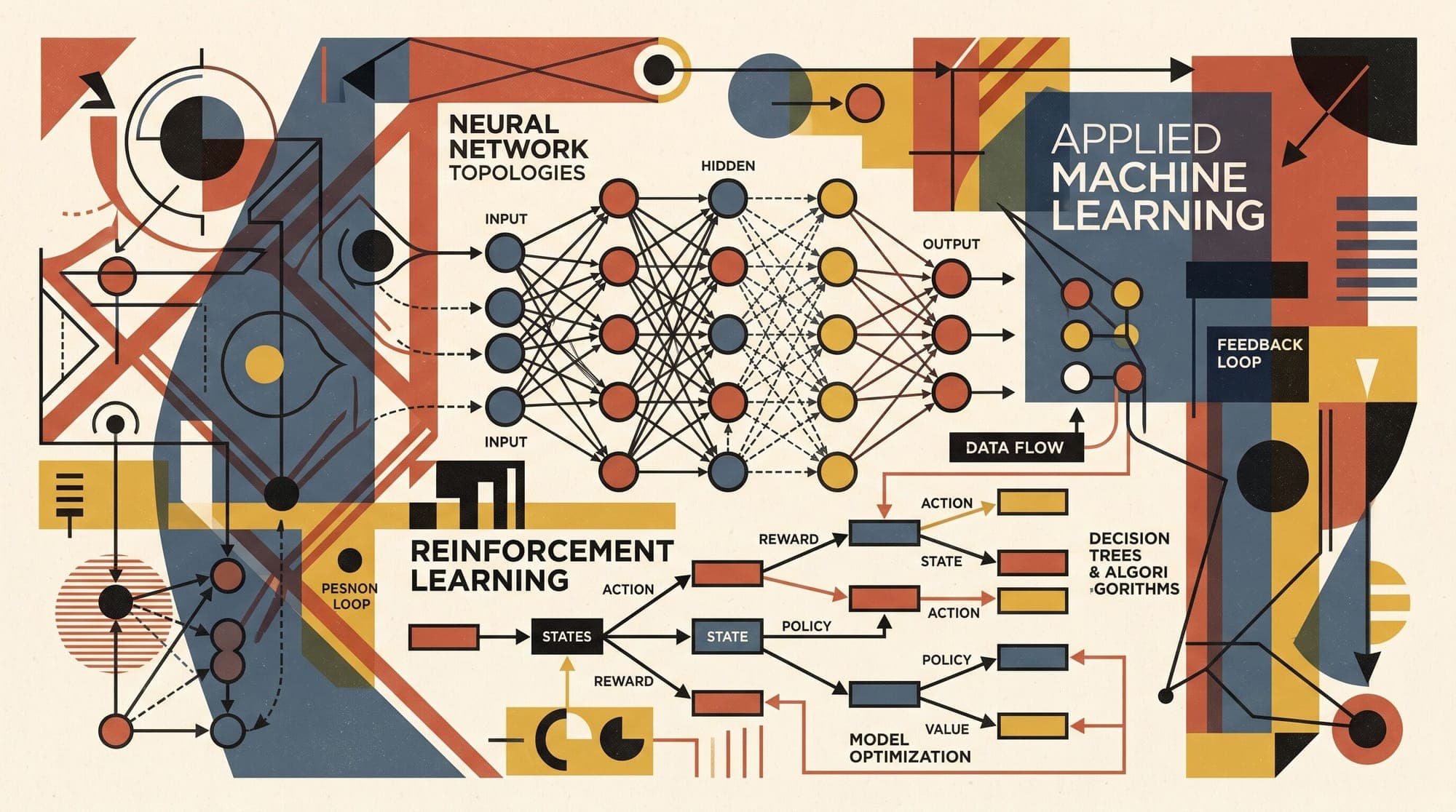
Diagram illustrating reinforcement learning feedback loops and post-training optimization pipelines

Focus on Gemini Post-Training and Reinforcement Learning

At Google, Zoph returns to research leadership, reporting within Google's AI division. A company spokesperson noted that his work will focus directly on post-training alignment, reasoning architectures, and reinforcement learning strategies for upcoming Gemini iterations.

Post-training methodologies, including reinforcement learning from verifiable rewards (RLVR) and process reward modeling, have become central to frontier model capabilities as pre-training scaling faces data constraints and higher compute costs. Zoph's return to Google aligns with the lab's acceleration of reasoning-focused models, following recent deployments of Gemini 3.7 Flash and Gemini Omni updates.


Sources

Written by

More to read

  • Matryoshka Representation Learning (MRL): Mathematical Foundations, Multi-Scale Loss Optimization, and Adaptive Vector Retrieval

    Matryoshka Representation Learning (MRL) has become the standard architectural foundation for modern dense text embeddings. Introduced by Kusupati et al. at NeurIPS 2022 and subsequently deployed across frontier embedding models like OpenAI text-embedding-3, Nomic Embed, and BAAI BGE-M3, MRL solves a structural inefficiency in vector retrieval: the rigid coupling between embedding dimensionality, memory consumption, and semantic fidelity. Traditional dense encoders project arbitrary text sequen

    1 min
  • llama.cpp Merges DFlash 2 Support for Up to 2x Faster Speculative Decoding Across Long Contexts

    The open-source llama.cpp project has merged native support for DFlash 2, bringing parallel speculative decoding and substantial inference throughput improvements to local LLM serving across CPU, Apple Silicon, and GPU backends. The implementation, integrated via Pull Request #27342, adds local convolution operators and candidate selector mechanics designed specifically for the DFlash 2 architecture. Non-Autoregressive Speculative Drafting Standard speculative decoding uses a smaller autoreg

    1 min
  • Meta Previews Hatch Consumer AI Agent with Dedicated Cloud Virtual Machines

    Meta is preparing to launch a consumer-facing autonomous AI agent codenamed Project Hatch, designed to execute long-running online tasks in the background using dedicated cloud virtual machines. Details of the project emerged from internal Meta memos reported by Business Insider and The Information. Unlike conventional conversational chatbots that respond synchronously to prompts, Hatch operates as an asynchronous personal agent capable of completing complex web interactions autonomously. Clo

    1 min

