
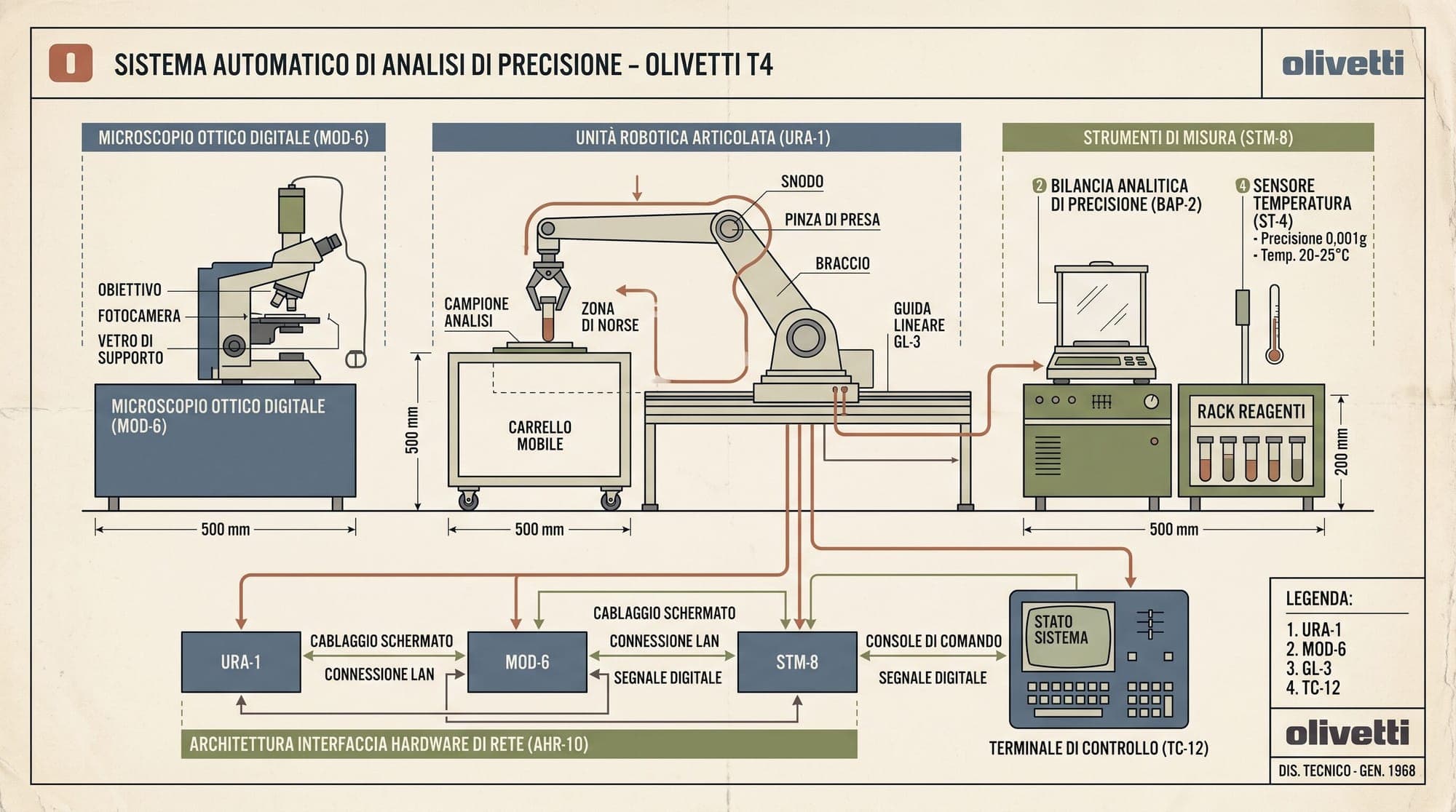
Anthropic has introduced a research preview of the Model Hardware Standard (MHS), an open specification designed to connect autonomous AI agents with physical scientific instruments and manufacturing hardware. The framework establishes a unified interface for models to programmatically monitor, orchestrate, and control physical devices across network boundaries.
According to reporting from Reuters and Wired, the standard aims to expand agentic automation beyond software APIs into physical laboratory workflows, enabling continuous, multi-step experimental execution with minimal human intervention.
Unified Control Across Scientific and Industrial Hardware
The Model Hardware Standard operates on any device equipped with a programmable interface. Anthropic designed the system to support a broad spectrum of physical equipment, ranging from automated optical microscopes and robotic liquid handlers in life sciences to high-precision laser calibration systems used in quantum computing research.
Under the specification, hardware devices expose their operational capabilities, sensor streams, and safety limits through standardized network protocols. Autonomous agents can query device state, issue actuation commands, verify mechanical execution against real-time sensor feedback, and dynamically coordinate multiple machines operating in sequence.

Extending Protocol Abstraction from Software to Physical AI
The introduction of MHS mirrors the architectural philosophy behind Anthropic's Model Context Protocol (MCP), which standardized how language models interface with external data stores, software tools, and file systems. While MCP focused on digital environments, MHS addresses the unique requirements of physical systems: hardware handshakes, asynchronous execution loops, variable network latency, and continuous sensor telemetry.
By abstracting proprietary instrument control protocols into a uniform schema, the standard allows foundation models to execute closed-loop experimental iterations. For example, in automated drug discovery pipelines, an agent can instruct a synthesizer to prepare compound variants, command a robotic arm to transfer assay plates to an imaging station, analyze spectroscopic data, and adjust subsequent synthesis parameters autonomously.
Partner Previews and Open-Source Roadmap
Anthropic is distributing the initial release of the Model Hardware Standard to select academic and enterprise research partners. The preview period will focus on refining hardware safety guardrails, validating fault-tolerance mechanisms, and establishing standardized containment benchmarks to prevent physical damage or unsafe machine states during autonomous operation.
Anthropic indicated that following the partner validation phase and evaluation benchmarking, the Model Hardware Standard will be released as an open-source framework for the broader AI and scientific research communities.



