AI Assistant Startup Instinct Raises 50M Series B at .5B Valuation

Spear Street Technology, the creator of the personal AI assistant Instinct, has raised $250 million in a Series B funding round that values the one-year-old startup at $2.5 billion. The investment was co-led by Index Ventures and Benchmark, with participation from Greenoaks and Conviction. The capital injection brings Instinct's total funding to $350 million, following a $75 million Series A led by Kleiner Perkins partner Mamoon Hamid earlier in August 2026 and initial seed financing backed by

2 min
AI Assistant Startup Instinct Raises 50M Series B at .5B Valuation

Spear Street Technology, the creator of the personal AI assistant Instinct, has raised $250 million in a Series B funding round that values the one-year-old startup at $2.5 billion. The investment was co-led by Index Ventures and Benchmark, with participation from Greenoaks and Conviction.

The capital injection brings Instinct's total funding to $350 million, following a $75 million Series A led by Kleiner Perkins partner Mamoon Hamid earlier in August 2026 and initial seed financing backed by Greenoaks.

Autonomous Personal Assistance Architecture

Founded by 23-year-old Noah Shinn, Instinct operates as an autonomous agent designed to handle administrative and scheduling tasks across user devices. Rather than relying purely on in-app prompt windows, the system interfaces directly with users via SMS, phone calls, and connected third-party applications.

Early private beta users utilize the assistant for task workflows including booking logistics, managing subscription cancellations, coordinating calendars, and purchasing items online.

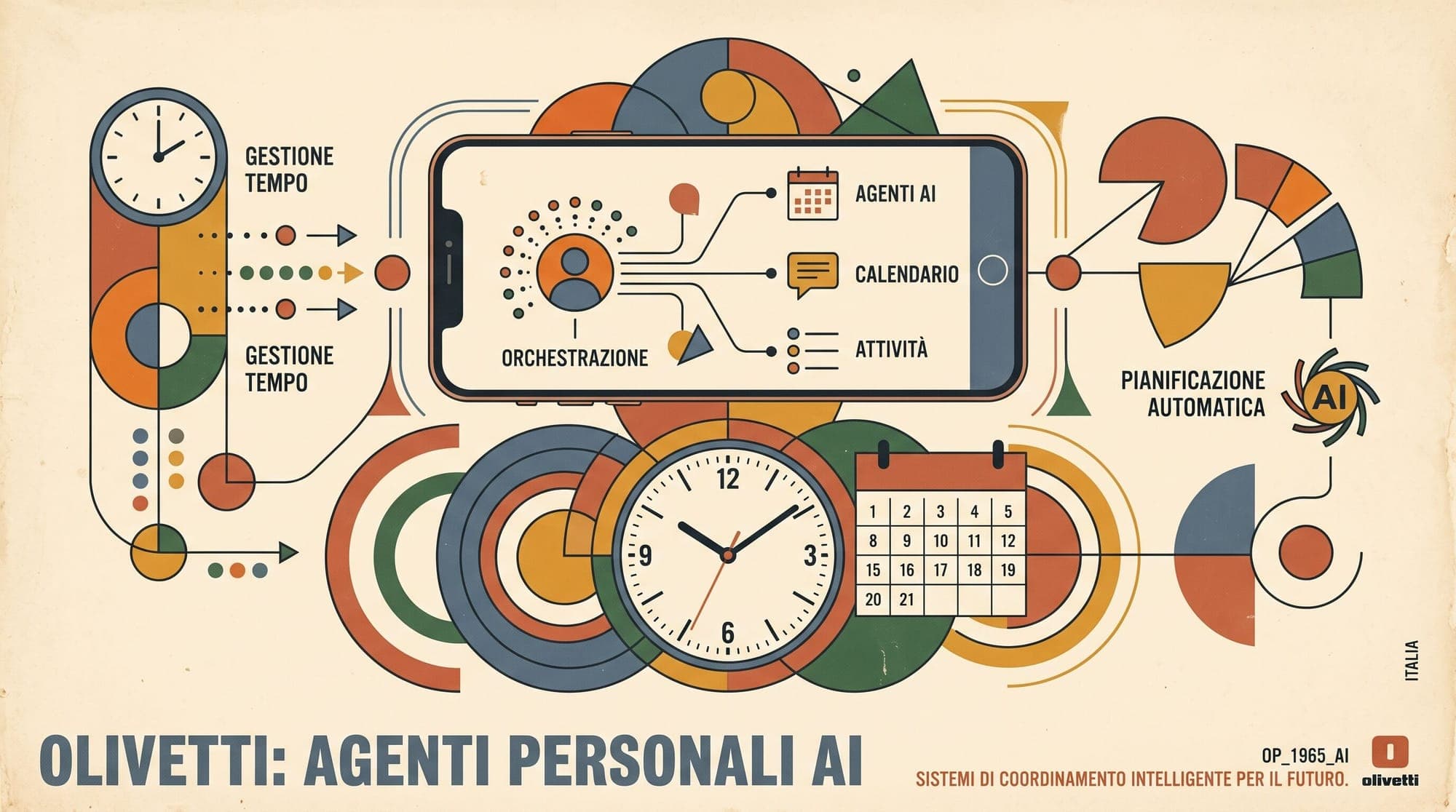
Instinct Autonomous Agent Node and Permission Architecture

The core mechanics of Instinct rely on broad integration with user communication channels and OS-level application hooks to execute multi-step routines autonomously on behalf of the user.

Valuation Momentum and Privacy Considerations

The rapid escalation in Instinct's valuation, increasing fivefold in recent weeks from its Series A level, reflects intensified venture capital interest in general-purpose consumer agent architectures.

However, the deep system integrations required for Instinct's automated execution have drawn technical scrutiny:

  • Broad Permission Scopes: To fulfill requests autonomously, the assistant requires access to user messaging histories, contact books, calendars, and external accounts.
  • Data Governance: Industry observers and privacy analysts have highlighted concerns regarding how interaction transcripts and authorization tokens are isolated and secured during automated task execution.

Instinct is currently in private beta testing with plans to expand general availability as its infrastructure scales.


Sources

Written by

More to read

  • GraphRAG Frameworks and Architectures in Production: Comparing Microsoft GraphRAG, LightRAG, Neo4j GenAI, and Kùzu

    Standard dense retrieval-augmented generation (RAG) relies on vector embeddings to retrieve top-k chunks based on cosine similarity. While effective for point-lookup queries against localized text segments, dense vector search breaks down under two common production workloads: multi-hop relational reasoning across disconnected documents and global corpus-wide summarization. When answering questions that require traversing relationship paths across disparate data points, or synthesizing broad th

    1 min
  • Low-Rank Adaptation (LoRA) and QLoRA: Mathematical Foundations, Intrinsic Rank Dynamics, 4-Bit NormalFloat Quantization, and Memory-Efficient Fine-Tuning

    Fine-tuning large language models on custom datasets presents a significant hardware challenge. While running inference on a 70-billion parameter model requires only the model weights in memory, full-parameter fine-tuning (FPFT) demands an order of magnitude more resources. During standard 16-bit mixed-precision training with optimizers such as AdamW, each parameter requires 2 bytes for the static weight, 2 bytes for the gradient, 4 bytes for the 32-bit master weight copy, and 8 bytes for the fi

    1 min
  • Salesforce and Anthropic Launch Claudeforce to Embed CRM into Claude via Model Context Protocol

    Salesforce and Anthropic have unveiled Claudeforce, an expanded enterprise partnership designed to bring CRM data, business logic, and automated workflows directly into Claude's conversational interface. The core component of the rollout is a plugin dubbed Salesforce in Claude for Claude CoWork, which launches with 37 pre-built sales skills. The integration allows sales representatives and knowledge workers to query pipeline metrics, summarize meeting histories, inspect deal health, and execute

    1 min

